Growing flowers from seed is a cheap, easy way to fill your garden with colour. From scented sweet peas to delicate cosmos and tasty nasturtiums, here are 8 easy flowers you can grow this year.
Perennials may form the core of an established garden, but annual flowers have unmatched versatility. You may choose to grow flowers from seed out of a fondness for a specific bloom or because you get a lot more plants for your money when buying flower seeds. If you're still on the fence, here are six reasons why you should grow annual flowers from seed:
-
It's a low-risk way of testing out different colour schemes and plant combinations, as well as figuring out what grows well in your garden, before committing to a planting scheme.
-
You can easily fill gaps in beds and borders while waiting for shrubs and perennials to reach their full size.
-
Growing cut flowers from seed is the cheapest way to enjoy bouquets of flowers all summer long.
-
Annuals are ideal for colourful, seasonal container and hanging basket displays.
-
You can grow many annuals as companion plants in vegetable beds to help deter pests.
-
Nurturing a plant through its full life cycle is incredibly satisfying, and it's a great way for kids (and adults) to learn about plants!
If you haven't planted seeds before (or you need a refresher), check out my complete beginner's guide to growing plants from seed. Get started with this selection of easy flowers to grow from seed in the UK.
1. Sweet peas

Sweet peas are one of the most popular flowers to grow from seed, and for good reason! Once they get going, you can pick flowers all summer long and, unlike many annuals, they are wonderfully fragrant. You can buy sweet pea plants in spring, but they're very easy to grow from seed, and planting sweet pea seeds is a lovely job for the cold late-winter months when it feels like spring is still a long way away.
Growing sweet peas from seed also gives you access to a much wider variety of cultivars, including heirloom varieties. For taller flower arrangements, choose a long-stemmed plant like 'White Supreme' or 'Charlie's Angel'. 'Matucana' is renowned for its strong scent, and dwarf varieties such as 'Little Sweetheart' and 'Cupid Pink' are ideal for growing in smaller pots around seating areas. If you're short on space, choose a pack with a mix of colours – this year, I've gone for 'Perfume Delight', but I was strongly tempted by the striped flowers of Sweet Pea 'Mixed Stripes'.
When to plant sweet peas: Sow seeds under cover in October or November or in February or March. Autumn-sown sweet peas may flower earlier. You can also sow seeds in the ground outside in April or May.
When do sweet peas flower?: Sweet peas flower from June to October, though it's possible to get earlier flowers in May in mild areas.
2. Cosmos

Cosmos give a light, airy feel to cottage garden borders, with their fine-stemmed daisy-like flowers and feathery foliage. They're prolific bloomers, making them an essential addition to any cut flower garden, and pollinators love their colourful, open flowers. Cosmos are half-hardy, so you need to make sure all risk of frost has passed before planting them outside. Other than that, growing cosmos from seed is easy, and the plants are low maintenance.
White cosmos varieties, such as 'Purity' and 'Lucinda', are perfect for complementing dramatic dahlias and other colourful flowers. 'Xanthos' is a pretty mid-height cultivar with wonderfully understated lemon yellow blooms. For a more dramatic look, choose 'Capriola', with its striking pink-rimmed white petals, or 'Double Click Rose BonBon', a tall cultivar with showy pink double flowers. Tall cosmos plants look best at the back of a border, but you can grow smaller varieties like 'Candlyfloss Mixed' in pots.
When to plant cosmos seeds: Sow seeds under cover between March and May.
When do cosmos flower?: July to October.
3. Sunflowers

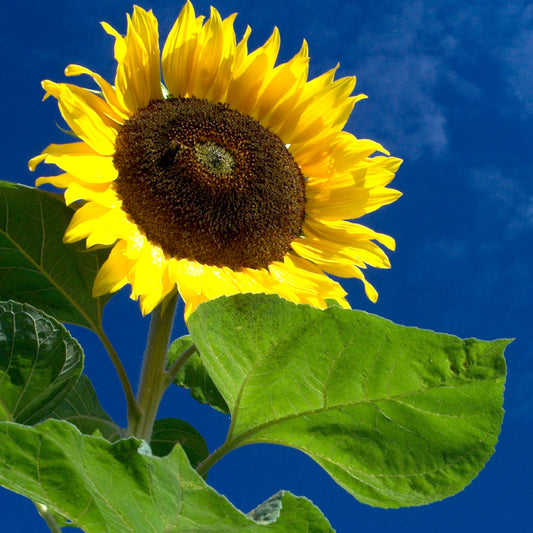
There's nothing like a sunflower's sunny face to brighten up your garden in summer. They are a very popular flower to grow with kids, but you do not need to be a child to enjoy them! Sunflowers come in more shapes and colours that you might expect, from the fluffy double blooms of 'Double Sun King' to the burgundy-red flowers of Sunflower 'Red Sun' and dramatic flame-like petals of Sunflower 'Ring of Fire'. For purists, there are many subtle variations on the classic look, including 'Pacino Gold', 'Moonwalker' and, of course, 'Giant Single'.
You can plant sunflowers directly outside or start them in pots indoors. They prefer rich soil and, as their name suggests, need sun to thrive. You can grow compact varieties, such as 'Teddy Bear' and 'Pacino Gold', in containers.
When to plant sunflower seeds: Sow indoors between March and May or outdoors from mid-April to the end of May.
When do sunflowers flower?: July to early September, depending on when they're sown.
4. Cornflowers

Dainty cornflowers, with their frilly petals and pastel tones, are a staple of English cottage gardens and wildflower meadows. They're an excellent flower for wildlife gardens as bees and butterflies love them, and the seedheads provide food for birds. Cut flowers from taller varieties to bring indoors and plant smaller cultivars at the edges of borders or in pots. Cornflowers are as unfussy as they come, thriving in poor soil and full sun. Sow seeds outside where you want the plants to grow and lightly rake soil over the top.
True-blue flowers are rare, which is one reason why classic blue cornflowers like Cornflower 'Double Blue' are so popular. You can also buy pink, white, purple and even deep red cornflowers, such as the dramatic Cornflower 'Black Ball'. Mixed packets of seeds are the easiest way to get a natural blend of colours; 'Classic Fantastic' offers a delightful mix of blue and white blooms, 'Classic Magic' leans more towards mauve and purple, and 'Classic Romantic' provides bright pinks and red.
When to plant cornflower seeds: You can either sow cornflower seeds in March–May to flower the same year or in September–October to flower the following year.
When do cornflowers bloom?: June to September; sow in succession to get a longer supply of flowers.
5. Poppies

The poppy family includes annual, biennial and perennial varieties. You can buy perennial oriental poppies like Papaver orientale 'Turkenlouis' as plants, but annual and biennial varieties are generally grown from seed. Planting poppy seeds is easy – simply scatter them across the ground where you want them to grow. Poppies don't like to be transplanted, and they do better in the ground than in containers.
The field poppy is the iconic symbol of remembrance, often seen in wildflower meadows and sometimes still in fields. 'Ladybird' is another popular red poppy with striking black blotches. Poppies also come in softer hues for a more subtle display. Poppy 'Amazing Grey' has gorgeous smoky purple semi-double blooms, and the 'Mother of Pearl' selection is a mix of pink, lilac and white flowers. More unusual varieties include the dramatic Poppy 'Black Peony' and 'White Swan'.
When to plant poppy seeds: You can sow poppy seeds for annual varieties in spring (March–May) or autumn (September–October). Sow biennial seeds in summer for flowers the following year.
When do poppies bloom?: June to September, though individual flowers only last a few days. Deadhead blooms to encourage plants to continue producing flowers.
6. Nasturtiums

Nasturtiums are one of my favourite plants. Not only are they super easy to grow, but they look pretty and are completely edible. I pick the leaves to add a peppery taste to summer salads (I've found nasturtiums to be much more reliable than rocket) and the flowers to decorate cakes. Nasturtiums are also popular with pollinators, making them an all-round awesome plant to grow. You can buy them as bedding plants, but they're cheaper to grow from seed.
Nasturtium flowers are typically shades of red, orange and yellow, though there are more unusual, decorative varieties like 'Chameleon', which has pale yellow flowers that look as if they've been splattered with red paint. 'Tom Thumb' is a mixed pack of low-growing plants with bright red, orange and yellow flowers that's a good choice for pots and vegetable beds. For additional decorative interest, 'Alaska' has variegated cream and green leaves.
When to plant nasturtiums: Sow nasturtium seeds outside in spring, after the last frost (March–May depending on where you live).
When do nasturtiums bloom?: Nasturtiums can flower from June through to the first frost in October.
7. Marigolds

French marigolds (Tagetes patula) are one of the most rewarding flowers to grow from seed. These pretty annuals grow fast and bloom all through the summer and well into autumn, as long as you deadhead the flowers. Last year, I had marigolds in my pots up until the first hard frost hit in the middle of November. Like sweet peas, it's best to start them early indoors to make the most of their long blooming period.
Sow a packet of marigold seeds and you'll have a profusion of brilliant orange, red and yellow flowers. The shape of the flowers varies depending on which variety you sow; Tagetes 'Starfire' has flat, open blooms, 'Durango Mixed' has multiple layers of petals, and 'Boy O Boy' has ruffled petals, giving the flower a rounder appearance.
Calendula, which is also known as the English marigold or pot marigold, isn't part of the same family, but it is another easy and rewarding plant to grow from seed. Both French marigolds and calendula are popular companion plants, but for different reasons. French marigolds repel whiteflies and suppress parasitic nematodes, whereas calendula attracts insects that feed on common garden pests.
When to plant marigold seeds: Sow indoors from late February (March or April in cooler areas) or outdoors once all risk of frost has passed.
When do marigolds flower?: Marigolds flower from June through to October or November.
8. Zinnias

With their bright, dahlia-like blooms, zinnias will light up any garden. They're very popular as cut flowers and grow well in containers or beds, as long as they get enough sun. Taller varieties like Zinnia 'Purple Prince' will give you longer stems for cut flowers, but shorter plants are better for pots and the front of borders. Single-flowered varieties are good for pollinators, but the double-flowered cultivars are more decorative. A single pack of Zinnia 'Dahlia-Flowered Mixed' will give you enough flowers to pick and enjoy in your garden throughout the summer and early autumn.
Zinnias are heat loving plants and will grow best in a sheltered, sunny spot. If you have a partially shaded bed, Zinnia 'Envy' is more tolerant of shade than other varieties. Zinnias are fast-growing flowers from seed, so don't be tempted to plant them too soon, as they'll sulk if you move them outside too early. If you have a very warm bed with light soil, you can sow directly outside at the beginning of June, but the plants will flower later. For most parts of the UK, it's best to sow zinnia seeds undercover and plant them outside in June.
When to plant zinnia seeds: Sow seeds in a warm place undercover in April or at the beginning of May in cooler areas.
When do zinnias bloom?: Zinnias usually start flowering in July and will bloom through to the first frost.