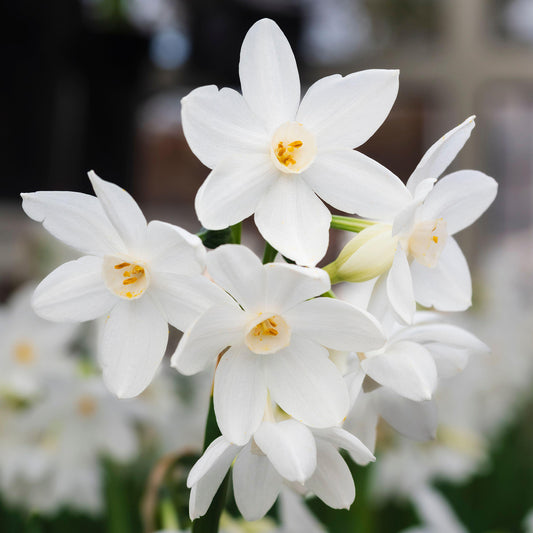
Daffodils are the heralds of spring and one of Britain’s best-loved flowers. Plant daffodil bulbs in your garden and welcome the sunshine flower back year after year.
After a long, grey winter, the first daffodils are a welcome sight, bringing with them the promise of spring. Daffodils are the common name for narcissi – a group of spring-flowering bulbs with strong stems and trumpet-like flowers. There are 13 divisions of narcissi, which are used to group daffodils with similar characteristics. Find out more about these divisions in our guide to different types of daffodils.
Daffodils are hardy, easy to grow in containers and beds, and require very little care. Explore our selection of the best narcissus bulbs and combine early and late-flowering varieties to enjoy daffodils in your garden and home throughout spring.
Where to plant daffodils

You can plant daffodils in pots, beds and borders. They prefer fertile, well-drained soil and thrive in full sun or light shade. Narcissus 'Actaea' and Narcissus 'Jack Snipe' are good varieties for partially shaded areas.
Daffodils are also suitable for naturalising. Plant them in grass verges, a section of lawn or a wildflower meadow, and they will naturally spread to create a drift of flowers that return again and again. You need to be prepared to leave the area unmown until after the foliage has died back – this could be mid-summer if you plant late-flowering narcissus.
When to plant daffodil bulbs
The best time to plant narcissus bulbs is in early autumn. September is ideal, but October or even November can be fine, especially if it’s a mild autumn. It’s beneficial to plant narcissus bulbs when the soil is still warm, so the bulbs can develop strong roots before winter.
Don’t panic if you got some bulbs in your Christmas stocking or found some at the back of the shed during a winter clear out. You can plant daffodil bulbs in winter, but you may not get as many flowers in the first year.
To grow daffodils for Christmas, buy a variety that’s designed to be grown indoors, such as Narcissus tazetta 'Paperwhite'. Plant the bulbs in a pot in September and leave them on a sunny windowsill.
How to plant daffodil bulbs

Before planting, check over your bulbs and discard any that are soft or mouldy. Prepare your planting site by removing any weeds, loosening the soil and digging in some compost or other organic matter.
Dig a hole two to three times the length of the bulb (around 10–15 cm) and position the bulb in the hole with the tip pointing up. Group daffodils in clusters of around six bulbs, or plant them around 10 cm apart in larger blocks. Cover the bulbs with soil and water them in well.
Planting daffodil bulbs in pots
When growing daffodils in containers, you can plant them closer together – around 5 cm apart. Add a thick layer of peat-free compost to the bottom of your pot, then nestle the bulbs in the compost, point up. Cover them with more compost until the bulbs are at the correct depth.
Daffodils can be layered with other bulbs in a large pot to create a longer-lasting display – a technique known as a “bulb lasagne”. Plant tall varieties, like Narcissus 'Tahiti', as a base or mid-layer or add dwarf daffodils like Narcissus 'Tête à Tête' to the top layer of bulbs.
Planting narcissus bulbs in grass
The easiest way to create a natural look when planting bulbs in grass is to scatter the bulbs randomly and dig each bulb in where it falls – even if some of them end up clumped together. A bulb planter is useful to pull out a plug of turf and soil. Pop your bulb in (pointy end up), then loosen some of the soil from your plug and scatter it around the bulb before replacing the turf and watering in the bulbs.
You can add a bit of compost or grit to your hole before planting your bulb, but don’t fertilise the ground as this will just encourage the grass to grow.
How to care for daffodils

Once planted, daffodils need very little care or maintenance. This makes them a great flower for beginner (or forgetful!) gardeners or those who are short on time.
Watering and feeding
Bulbs planted in the ground shouldn’t need watering unless there’s a prolonged dry spell. After the first year, you can apply a general fertiliser to the soil in spring, but this isn’t always necessary.
For narcissus bulbs in pots, keep the compost moist, but don’t let it get waterlogged. Once shoots appear, you can feed every week or so with a high-potassium fertiliser (e.g., tomato feed) to encourage flowering.
Deadheading daffodils
Unless you want your daffodils to self-seed, cut each stem above the leaves when it’s finished flowering. This means the plant will focus on storing energy in its bulb for next year rather than producing seeds.
If you want your daffodils to naturalise, then you can leave the flowerheads on to set seed and spread!
What to do with daffodils after flowering
Leave the foliage for six to eight weeks after the plant has finished flowering, until it’s turned yellow and died back. This lets the plant build up its energy reserves, so it can produce flowers the following year. Some people tie up or braid the leaves after flowering to make their beds look neater, but this reduces the plant’s ability to photosynthesise (produce energy), meaning it’ll store less energy and you’ll get fewer flowers. Embrace the natural life cycle of the plant and leave those leaves alone!
Daffodil bulbs are hardy and can be left in the ground over winter. You can also leave narcissus bulbs in the pot after flowering and just replace the top layer of compost and add a slow-release fertiliser in spring. If you’ve planted the bulbs close together, this can restrict their growth, so it may be better to replant them in the ground and buy new bulbs for next year (which is a handy excuse to try a different variety!).
How to propagate daffodils
Daffodils produce new bulbs, and over time, clumps of daffodils can get overcrowded, which can reduce flowering. You can dig up these clumps in autumn and carefully separate the bulbs into smaller groups. Replant immediately, at the same depth you’d plant new bulbs, and they should shoot up and flower the following year.
Common problems
Daffodils are generally easy to look after, but they can suffer from a few common problems.
Daffodil blindness refers to plants that produce plenty of foliage but no flowers. This can be due to overcrowding, poor soil conditions or planting or pests or disease. You can prevent daffodil blindness by following the steps above when planting and caring for your daffodils. If they still come up blind, here are some solutions that may help you rescue the plants for next year:
-
If your daffodils look crowded, lift and divide clumps in autumn to give plants more space to grow.
-
Mulch poor soil with compost of well-rotted horse manure to add nutrients. When growing daffodils in pots, you should replace at least half the compost every year and feed the plants throughout the growing season, until the leaves turn yellow.
-
Make sure your daffodils are getting enough sun. If you risked planting them in shade and they struggled to flower, it may be worth moving them to a sunnier spot.
-
Water your daffodils during prolonged dry spells, even after the plants have finished flowering. If you didn’t do this the previous year, it could explain why your plants haven’t flowered this season.
Narcissus bulb fly can also cause daffodil blindness. If you’ve ruled out other causes, dig up a bulb and check for creamy white maggots. Dispose of any affected bulbs, but don’t add them to your compost heap.
Narcissus basal rot is an infection caused by a fungus that specifically targets narcissi. It causes bulbs to go soft and rot, and can lead to early yellow foliage and a lack of flowers. Inspect stored bulbs before planting, and if you discover rot in planted bulbs, lift them early and avoid replanting daffodils on the same site.
Our favourite varieties of daffodil (narcissus)
When choosing daffodil varieties, consider where you want to plant them, as well as their height, colour and whether they’re an early or late flowering variety. Here are some of our favourite narcissi:
Narcissus ‘Tête à Tête’: A popular miniature daffodil with bright yellow flowers that blooms in early spring. A great choice for smaller pots and containers or planted at the front of a border. Height: 15–20 cm.
Narcissus 'Thalia': The white, star-shaped flowers of this narcissus were a favourite of the Victorians. It blooms in mid-spring (March and April) and looks particularly good naturalised or planted in swathes across a large bed. Height: 35–40 cm.
Narcissus 'Minnow': A dwarf variety with creamy outer petals surrounding a yellow cup. Each stem carries up to five scented flowers, making it a delightful cut flower. Height: 15–20 cm.
Narcissus tazetta 'Paperwhite': A heavily scented daffodil with pretty white flowers that’s often forced and grown indoors. It’s not as hardy as other varieties, so avoid overwintering outdoors in colder areas of the UK. Height: 35–45 cm.
Narcissus 'Tahiti': A striking double-flowered daffodil with layers of yellow petals interspersed with vibrant orange frills. An eye-catching variety for beds, borders and pots. Height: 40–45 cm.
FAQ
When do you plant daffodil bulbs?
Daffodil bulbs are best planted in September or early October. This gives the bulbs time to develop roots before winter, ensuring plenty of flowers come spring. If you’ve missed the ideal window, you can still plant daffodils up until the end of the year, but they may not flower as well as you’d like in the first year.
Should you deadhead daffodils?
Yes, deadheading daffodils encourages the plant to store energy in its bulb, which can lead to better flowers the following year. The only exception to this is when you want daffodils to set seed, for example, if you want them to naturalise over a grassed area.
Is it too late to plant daffodil bulbs?
Daffodils should ideally be planted in early autumn, but you can plant them up until the end of December. Bulbs planted later may not do as well in the first year, but they should recover after that, and it’s better to give them a chance rather than throwing them away! Check each bulb before planting to make sure it’s firm and has no signs of mould.
Are daffodils poisonous to cats?
Yes, all parts of the plant are toxic to humans and animals. Nibbling a daffodil leaf isn’t likely to prove fatal, but your cat could experience symptoms such as diarrhoea, vomiting and shivering. If you believe your cat has been eating daffodils, it’s best to call your vet and ask their advice on what to do next.
Are daffodils poisonous to dogs
Yes, daffodils are toxic to dogs, and you should take steps to prevent your pets from eating them. Severe poisoning is rare, but your dog could suffer from vomiting or diarrhoea or develop an irregular heartbeat. If you suspect or know your dog has eaten any part of a daffodil, contact your vet immediately.