September is when your flower beds give a last hurrah before settling down for the winter. Relax in your garden and enjoy the last of the summer sun surrounded by colourful borders or pots packed with asters, rudbeckias, agapanthus and fuchsias.
September is one of my favourite months of the year. By the time it rolls around, I’m longing for cool, crisp mornings and colourful autumn leaves, while still wanting to garden in a t-shirt during the day. One of my not-so-guilty pleasures is sitting out with a cup of tea, watching the bees and butterflies flutter around the late-season blooms, and feeling a comforting sense of limbo before we move forward into autumn.
It’s also a time to prepare for next year’s flowers by planting bulbs, sowing seeds, taking cuttings and dividing perennials. Use our September gardening guide to make your own to-do list for your garden this month.
September flower of the month: Hydrangea 'Wim's Red'

Hydrangeas are much loved for adding structure and long-lasting colour to gardens, but Hydrangea 'Wim's Red' is a particularly special variety. In early or midsummer, clusters of white flowers bloom on top of deep red stems. These panicles gradually turn pink as the summer progresses, maturing to a rich wine-red colour in late summer. In autumn, the green leaves also burn red.
As well as changing their colour, the flowers also have a sweet honey fragrance, which is unusual for a hydrangea. Hydrangea paniculata 'Wim's Red' is a medium-sized shrub, reaching a height of around two metres when mature, though you can prune it to keep it more compact. It will happily grow in sun or partial shade and most soil types, as long as the ground is moist and well drained. It prefers slightly acidic soil, but this isn't a necessity, as the flowers on panicle hydrangeas don't change colour based on the pH of the soil.
Add this beautiful chameleon plant to your garden this month and get 25% off.
Plant it with…
Heuchera 'Cranberry': This brilliant foliage plant adds year-round colour to your border, and the red leaves complement the colour-changing blooms of the hydrangea, particularly in late summer and early autumn.
Sanguisorba 'Tanna': Dark raspberry-red bottlebrush-like flowerheads on wiry stems float above mounding blue-green foliage, giving an airy feel that contrasts with the more structured appearance of Hydrangea 'Wim's Red'.
Sambucus 'Black Lace': The dark, near-black leaves of this black elder offer a dramatic backdrop for the colourful hydrangea flowers. With creamy pink flowers in early summer and berries in autumn, this offers plenty of interest for you and your local wildlife.
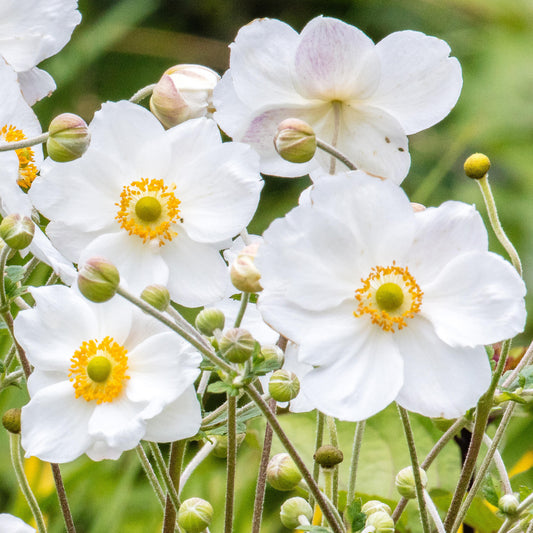
Anemone 'Honorine Jobert'

Japanese anemones brighten up the garden when most flowers are starting to fade, stretching their saucer-shaped faces up to the autumn sun. They’re also one of the few late-season flowers that can tolerate shade. Anemone 'Honorine Jobert' is a taller variety, growing up to 1.5 metres, with single white-petalled flowers and brilliant yellow stamens. I’m looking to plant some underneath a pair of birch trees where I hope they’ll enjoy the dappled shade and well-drained soil.
These pretty plants do have a tendency to wander at will, making them best suited to larger borders or woodland gardens where they have room to spread. In smaller gardens, you can grow them in containers or plant the anemone inside a ring of polythene inserted into the soil – this will help contain the rhizomes.
Plant it with…
Actaea 'White Pearl': Baneberry thrives in shaded or partially shaded borders, and its distinctive white flower spikes are a lovely companion to the round flowers of Anemone 'Honorine Jobert'.
Verbena bonariensis: The contrasting colour and texture of Verbena bonariensis make it the perfect colourful counterpart for ‘Honorine Jobert’ in a mixed herbaceous border.
Dryopteris 'Brilliance': This colour-changing evergreen fern is an excellent choice for ground cover in shady areas. It shoots out bright orange-red fronds in spring that mature to dark green leaves.
Aster 'Pink Crush'

Aster 'Pink Crush' is an eye-catching New England aster with dense clusters of dazzling pink flowers. Once fully grown, it forms a neat, round mound approximately 60 centimeters high. The plant’s green leaves hold their spot in the border until late summer, when an explosion of colour places this flowering perennial firmly as the star of the show. The open flowers draw bees and butterflies, as well as envious neighbours whose gardens are beginning to look a little drab.
Aster ‘Pink Crush’ is a low-maintenance, well-behaved plant. It won’t take over your border, and as long as you remember to water it occasionally during dry spells, it’ll give you (and the wildlife) plenty of flowers for months. It will benefit from being divided every few years. This aster’s shapely nature means it won’t look out of place in a formal garden, though it’s equally at home in a cottage garden or a sunny border.
Plant it with…
Calamagrostis 'Karl Foerster': This tall grass is a perfect backdrop for bright asters, with complementary colour and texture.
Kniphofia 'Poco Sunset': For dramatic contrast, pair this kniphofia’s fiery orange-red flowers with the tight purple blooms of Aster ‘Pink Crush’.
Nepeta 'Purrsian Blue': This dwarf cultivar of catmint flowers from May through to September, adding early-season interest to your border. The silvery foliage and purple-blue flowers calm the intensity of the aster's pink flowers, while still allowing them to shine.
Clematis 'Nelly Moser'

Clematis ‘Nelly Moser’ is a top choice for any garden with a bare patch of wall and a bit of shade. It blooms twice a year – once in late spring/early summer and again in early autumn – with each large flower having striking white petals slashed with pink, rather resembling a candy cane. The colour fades in strong sun, so choose a semi-shaded position – a north-facing wall is ideal.
It can take a couple of years for clematis to get going, but once they do, they’re relatively easy to look after. They’re hungry plants, so add plenty of organic matter when planting and feed during the flowering period with a high potash fertiliser.
Plant it with…
Hydrangea 'Annabelle': This popular hydrangea prefers partial shade. Its flowering period overlaps with Clematis 'Nelly Moser', so you can both in full bloom, but as the clematis fades, Hydrangea 'Annabelle' will continue to flower through the summer months.
Hosta 'Wide Brim': Clematis like cool feet, and hosta leaves provide valuable shading as well as interesting foliage for the base of the plant. This cultivar has variegated blue-green leaves with cream margins.
Fuchsia mix: Like clematis, fuchsias need moist, well-drained soil. They have a long flowering period and flower really well in partial shade. This mix of plants includes pale pink flowers that echo the colour of the clematis flowers, along with brighter pink and purple blooms for variety.
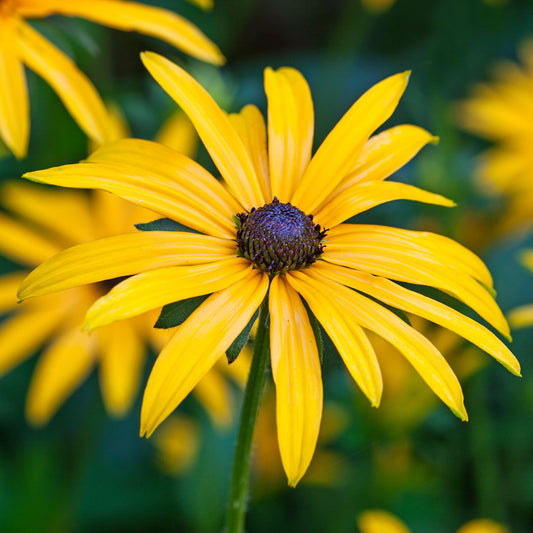
Rudbeckia 'Goldsturm'

This sunny coneflower gives a final blast of colour to your garden or to a vase of flowers, which is particularly welcome on grey September days. The golden petals surrounding the black, conical centre are a magnet for pollinators and a welcome addition to any wildlife garden. You can plant Rudbeckia 'Goldsturm' in large containers, but it’s best suited to garden borders and looks particularly spectacular if you have the room to plant it in large swathes alongside other flowering perennials or grasses.
Deadheading helps encourage Rudbeckia 'Goldsturm' to keep flowering through to October, but it’s nice to leave the final flowers to mature into seed heads at the end of the season to provide winter food for birds.
Plant it with…
Salvia 'Pink Amistad': Create a vibrant mix of colours by planting Rudbeckia ‘Goldsturm’ alongside these tall spikes of bright pink flowers. This salvia flowers from June to the end of October, adding long-lasting colour and scent to a border.
Penstemon 'Windsor Red': The deep crimson, tubular flowers of this penstemon add depth to a late-summer bed and are a brilliant companion for Rudbeckia 'Goldsturm' in a hot border.
Agapanthus 'Brilliant Blue': Blue and yellow are a classic, high-contrast combination. Pair agapanthus and rudbeckia in a sun-soaked border for a stunning display of summer flowers.
FAQ
What flowers are in season in September?
There are plenty of flowers to brighten your garden in September, including asters, rudbeckias, dahlias, fascias, sedums and fuchsias. Japanese anemones such as Anemone 'Honorine Jobert' grow well in shaded borders, and Clematis 'Nelly Moser' is a good choice to add colour to a north-facing garden.
What flowers can I plant in September in the UK?
September is a good time to plant perennial flowers like heucheras, camellias, hostas, clematis and hardy geraniums. You’ll also want to get your spring and hardy summer bulbs in the ground. Daffodils, in particular, should be planted by the end of September. You can also plant biennials like honesty, Sweet William and foxgloves that were sown in the summer.
What is September’s birth flower?
Asters and morning glories are the birth flowers for the month of September. Asters are easy to grow and produce daisy-like flowers in a range of bright colours. Morning glories are fast-growing vines with flowers that bloom for a single day. They symbolise love, renewal and new beginnings.
Want to plant your own birth flowers for September? Sow Ipomoea 'Heavenly Blue' (morning glory) seeds in spring to get stunning sky-blue flowers from June all the way through to October. Aster 'Pink Crush' is a versatile perennial with masses of bright pink flowers.