When the sun glints off frost-encrusted leaves and frozen spiders’ webs add decoration to bare shrubs and trees, it’s a beautiful time to be in your garden. Wrap up warm and enjoy the satisfaction of getting something productive done, without the pressure of a long list of gardening jobs.
January often brings us the coldest days of the year in the UK, with hard frosts and flurries of snow. There aren’t many jobs that have to be done in the garden this month, but spending time outdoors is a sure fire way to combat the January blues. For me, January is often a catch-up month for all the jobs I was too busy to do in the run up to Christmas. Take advantage of any dry, mild days to carry out winter pruning and planting or simply potter around your garden, thinking about how you want it to look in the coming year.
If your garden is looking a little drab, you may want to add some flowering perennials or winter-flowering shrubs. Our January flowers blog has lots of suggestions for plants that will brighten up your garden at this time of year.
Flowers, shrubs & trees

January can be a month of contradictions. Some years, we get a week of snow, other years, it's damp and unseasonably mild. Snow may be prettier, but you can take advantage of milder weather to plant, prune and give your garden a winter tidy up.
What to plant in January in the UK
-
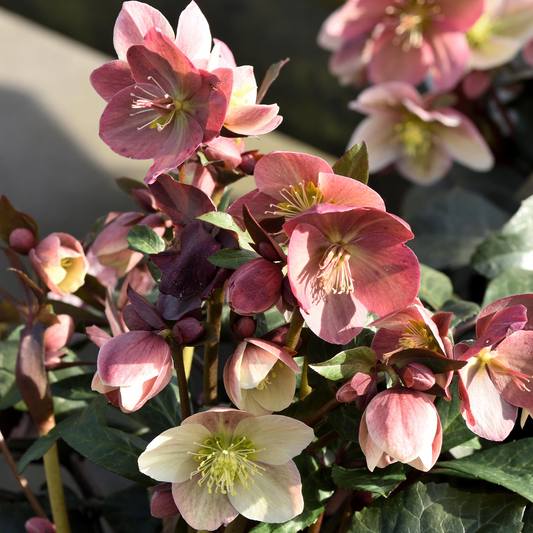
January is a good time to buy and plant hellebores – handy if you're looking to add some winter-flowering perennials to your garden.
-
Add winter fragrance and colour with scented shrubs such as sarcococca, witch hazel and Viburnum 'Dawn'.
-
If you get a mild spell, you can plant bare root shrubs and trees. Evergreen shrubs tend to be planted in autumn or early spring, but in mild areas, you can get away with planting them in winter and take advantage of the plentiful rain we tend to get at this time of year.
-
Choose a mild period to plant out your pot-grown Christmas tree. Check the variety to assess how much space you need for it.
-
You can plant amaryllis bulbs indoors for early spring flowers. Take advantage of our 40% off sale on remaining bulbs and enjoy beautiful winter flowers year after year.
What seeds to sow in January:
-
You can sow sweet peas indoors this month. If you planted seeds in autumn, these seedlings should be ready to be potted on.
-
If you have a heated propagator or greenhouse, you can sow annual salvias such as 'Blaze of Fire', begonias, and geraniums (pelargoniums).
Propagating and dividing
-
There's still time to take hardwood cuttings before the end of winter. Avoid taking cuttings during very cold periods.
-
You can also take root cuttings from summer and autumn-flowering plants such as Japanese anemones and Phlox paniculata. Ideally, you'd have taken root cuttings from spring-flowering plants earlier in the winter.
Pruning and cutting back
-
Deadhead winter bedding plants, such as pansies and cyclamen, to encourage flowering.
-
Prune wisteria in January or February. Trim the shoots you pruned in the summer, leaving two or three buds on each stem. This is also the time to carry out a hard pruning if you need to renovate an older plant. Winter pruning is best done on a mild day, so if January is particularly cold, leave it until next month.
-
Remove old leaves from hellebores to help prevent hellebore leaf spot and show off new flowers.
-
You may want to cut back ornamental grasses and seed heads. You can leave this until next month, but be sure to cut back old growth on perennials before new growth starts coming through.
-
Prune or renovate (if needed) climbing roses. Thin out old branches and cut back shoots that have flowered by two-thirds. You can also renovate any overgrown rambling roses this month.
-
If you have an overgrown honeysuckle, you can cut it back hard over winter to encourage vigorous growth in spring.
-
You can carry out hard pruning of rhododendrons (if needed) between now and March.
General maintenance
-
It may seem counterintuitive, but winter is a good time to clear your beds of perennial weeds. You can easily identify what you need to remove and there's little risk of you damaging new shoots coming through.
-
Inspect stored tubers and bulbs for any signs of rot. Make sure dahlia and canna tubers don't completely dry out.
Planning ahead
-
January and February are good months for planning. Spring is the peak time for garden work, so book local tradespeople now if you want your garden ready for summer.
-
Decide what new plants you want to add to your garden and make a list of bulbs, seeds and plants to buy. Summer-flowering bulbs will soon be available!
Fruit and vegetables

Your vegetable garden may be looking a little bare by now, but hopefully, you still have some winter greens and root vegetables to tide you over to spring. It may be tempting to take advantage of mild days to dig over beds, but if the soil is waterlogged from heavy rain, digging will compact it, causing more problems in the long run. Better to use the time to plan out how you’re going to use your veg growing space over the coming year.
What veg to plant in January in the UK
In most parts of the UK, January is too early to sow seeds outdoors. You can get a head start if you sow seeds indoors, in a heated propagator or a heated greenhouse. It’s easy to get carried away and sow seeds too early (I did this last year!), so work backwards from when you think you’ll be able to plant seedlings out and plan your sowing time based on that date.
-
Chilli peppers have a long growing season, so if you have somewhere warm, it’s a good idea to start them off at the end of January. Chilli seeds need a temperature of around 21°C to germinate and 16–18°C thereafter. Grow ‘Havana Gold’ for colourful fruits with gentle heat or ‘Scotch Bonnet Red’ if you prefer more spice.
-
You can sow peas indoors this month for a very early crop. If you want to direct sow outdoors, use cloches to warm the ground up this month.
-
You can also sow onions and leeks indoors to transplant outdoors in March or April.
-
Get a continuous crop of winter salad leaves by planting seeds in a bright conservatory or greenhouse. You could also try sowing radishes as long as the temperatures don’t fall below 5°C.
Harvesting
-
'Tis the season for brassicas. You can harvest kale, brussel sprouts, winter cabbage and hardy varieties of sprouting broccoli this month, as well as the first winter cauliflowers.
-
Continue to harvest leeks as and when you need them – they keep best in the ground.
-
You can also leave celeriac and parsnips in the ground until you're ready to harvest them.
-
Protect endive from the winter weather with a cloche or cold frame and you can enjoy fresh leaves throughout the winter.
-
If you don't have a greenhouse, you can still grow certain salad crops outside, though you'll need to grow them in a cold frame or use a cloche to protect them in harsh weather. Winter purslane, corn salad and land cress (a hardy version of watercress) are all suitable for growing over winter. Baby kale is also delicious in a winter salad.
Fruit bushes and trees
-
Plant bare root fruit bushes and trees as long as the ground isn’t frozen or waterlogged. If the conditions aren’t right for planting, you can store your plants in a frost-free shed or heel them into the ground.
-
Prune apple and pear trees. Remove any damaged or diseased branches, plus any branches growing into the middle of the tree – this allows air to circulate. Finally, shorten any long branches by up to a half of their length, making the cut just above a branch that grows outwards.
General maintenance
-
Cover rhubarb crowns with a forcing pot or other deep pot to force early pink stems. ‘Timperley Early’ is a good variety for an early crop, but only force healthy plants that have been in the ground for at least three years. If you force a rhubarb plant this year, give it a few years to recover before forcing it again.
-
Check brassica netting for any damage, particularly after storms or snow. Repair any holes, so that birds don't get trapped.
-
Spread manure or compost over beds. You can work it in or just spread it over the surface and let the worms do their work.
Planning ahead
-
Order your seed potatoes to get the best choice of varieties. If you live in a mild area, you can start chitting first early seed potatoes indoors. I pop my potatoes in old egg cartons with the eyes pointing up and leave them on a bright windowsill in a cool room.
-
Plan what vegetables you want to grow this year and make a list of seeds to order.
-
If you want to plant new fruit trees or bushes, order them now, before stock runs out.
Lawns and hedges

The best thing you can do for your lawn at this time of year is leave it alone! The ground is likely to be either wet or frozen and neither condition is helped by heavy footfall. If you have to walk across your lawn regularly, for example to access an outbuilding, I recommend putting in some stepping stones or a narrow path. This protects the grass and means you don’t end up with muddy shoes every time you go out.
January is often a quiet month for many people, so if you get a mild spell, it may be a good month to plant a bare root hedge. Hedge laying is also done over the winter – this traditional technique is an excellent way to rejuvenate deciduous hedgerows, but it does require some expertise.
Other garden jobs for January

There's not much to do this month, other than giving the birds a helping hand. I love waking up to see a blanket of snow over the garden, but as pretty as it is, too much can cause damage.
-
Continue leaving food out for the birds. If the weather is freezing, don't forget to fill bird baths with fresh (unfrozen) water.
-
Brush snow off greenhouses, cold frames and ponds to allow light in.
-
If you have heavy snow, you may need to brush it off conifers and climbers to prevent the weight of the snow from breaking branches and stems.
-
You don't usually need to make a hole in ice covering ponds, unless you have goldfish or koi carp. If you do have fish, you'll need to take steps to prevent the pond from freezing over.
-
Take advantage of sunny days to give pots and seed trays a thorough clean.
-
January is a quiet time of year for most garden contractors, so it can be a good time to get structural works done, such as putting in new fencing.
FAQ
What seeds can I sow in January in the UK?
You can sow sweet pea seeds in January, along with begonia, pelargonium and salvia seeds if you have a heated propagator or greenhouse. That said, unless you live in a mild part of the country, you may want to wait until next month to start sowing seeds, so you don't run out of space to store your plants before you can plant them outside in spring.
What vegetables can I plant in January?
Sow peas indoors in January to get an early crop. It's also worth sowing slow-growing vegetables like leeks and onions. You can continue to sow winter salad leaves in a greenhouse or conservatory.
What flowers can I plant in January in the UK?
January is the perfect time to plant hellebores, erica heathers, winter pansies and winter-flowering shrubs like witch hazel, viburnum, sarcococca and camellias. Viburnum × bodnantense 'Dawn' produces stunning fragrant pale pink flowers on bare stems which brings a hint of spring to dark winter days. You can also plant bare root roses and other flowering shrubs.