Product description
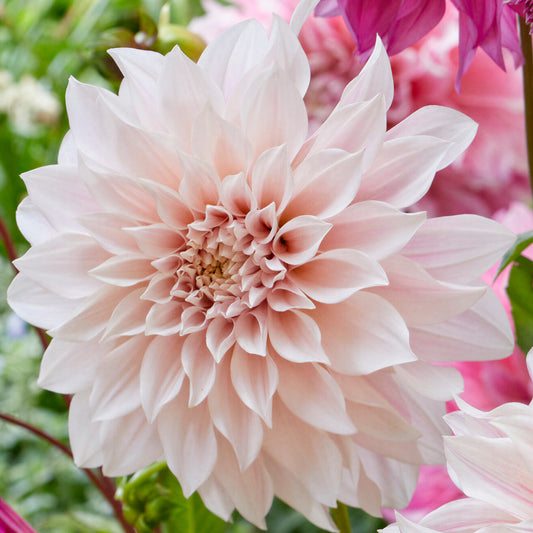
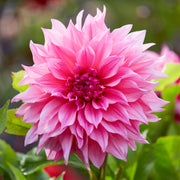
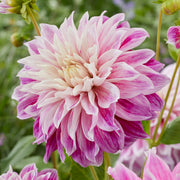
Dahlia Labyrinth is easy to recognise by its large, fully double flowers, with layers of twisted, ruffled petals in shades of peach and soft pink. Each bloom has its own slightly different shape, creating an interesting mix of colours and textures as the flowers open throughout summer and into autumn. It's a good variety for adding something a little different to garden borders, while the long stems also make it well suited to cutting for the vase.
Plant the tubers in a sunny spot once the risk of frost has passed, choosing fertile, well-drained soil or a suitably sized patio container. Pinching out the growing tips when shoots reach around 30cm encourages a bushier plant with more flowering stems, while taller growth may benefit from staking as the season progresses. In colder parts of the UK, lift the tubers after the first frost and store them somewhere cool and frost-free over winter, ready to plant again the following spring.
Please Note: Images are for illustrative purposes only and designed to be a representation of the item(s) being sold.
Dahlia
Dahlia 'Labyrinth'
Dahlia 'Labyrinth'Product description
Dahlia Labyrinth is easy to recognise by its large, fully double flowers, with layers of twisted, ruffled petals in shades of peach and soft pink. Each bloom has its own slightly different shape, creating an interesting mix of colours and textures as the flowers open throughout summer and into autumn. It's a good variety for adding something a little different to garden borders, while the long stems also make it well suited to cutting for the vase.
Plant the tubers in a sunny spot once the risk of frost has passed, choosing fertile, well-drained soil or a suitably sized patio container. Pinching out the growing tips when shoots reach around 30cm encourages a bushier plant with more flowering stems, while taller growth may benefit from staking as the season progresses. In colder parts of the UK, lift the tubers after the first frost and store them somewhere cool and frost-free over winter, ready to plant again the following spring.
Please Note: Images are for illustrative purposes only and designed to be a representation of the item(s) being sold.
Give your bulbs the best start




Plant specs, care guide & tips
Key features


Specifications
When to plant
| Jan | Feb | Mar | Apr | May | Jun | Jul | Aug | Sep | Oct | Nov | Dec |
|---|---|---|---|---|---|---|---|---|---|---|---|
Planting and flowering times are general guidelines and may vary based on your location and conditions. For best results, consult local gardening resources.
Instructions
Top Tip
Dahlias can be slow to emerge, particularly after a cold spring, so don't be tempted to give up on them too soon. If the tuber is still firm and healthy, give it a little more time to produce shoots.
How to Water
Keep the soil lightly moist while the Dahlia tubers are establishing, taking care not to overwater before shoots appear. Once plants are growing well, water regularly during dry spells, particularly when growing in containers, as these can dry out more quickly.
How to Plant
Plant Dahlia tubers in spring, laying them horizontally in a hole around 10-15cm deep, with the crown or old stem facing upwards. Cover with soil, spacing tubers around 60cm apart to allow room for the plants to develop.