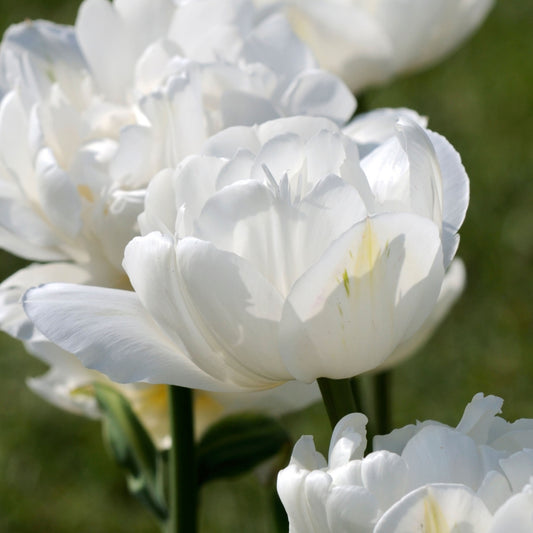
For a burst of jewel-like colour in your garden, tulips are hard to beat. Fill your borders, beds and pots with different varieties to enjoy a dazzling array of colours and flower forms.
Nothing says spring like a field of tulips. While you may not have space for a full tulip garden at home, a couple of large pots on your patio can give you those happy spring vibes. They also offer a welcome splash of colour in a mixed bed when dotted between summer and autumn-flowering perennials that are yet to get going. Tulips bloom from late March to May, depending on the variety. Choose a mix of early, mid and late-flowering varieties to keep your garden blooming throughout the spring.
Find out more about the 15 tulip divisions and how to choose the best tulips for your garden in our guide to tulip types.
Where to plant tulips

Most tulips prefer full sun, though some varieties will bloom in partial shade. Make sure the soil is well drained, as waterlogged soil can cause tulip bulbs to rot. It’s worth choosing a sheltered spot, so your beautiful flowers don’t get blown over in the wind!
You can plant tulips in garden beds or containers. Taller varieties look lovely planted behind low-growing perennials as part of the mid-layer of a border – the perennials then hide the tulip’s foliage when it dies back. Blocks of tulips also look very effective, particularly in formal gardens or if you have space for a dedicated tulip garden.
If you want to grow tulips specifically for cut flowers, you can plant them close together in a dedicated border or raised bed.
When to plant tulip bulbs
Tulip bulbs are best planted in autumn or early winter. November is the ideal time, as the colder weather can help prevent tulip fire, but you can plant them right up until the end of the year. I’ve had success planting tulip bulbs as late as the end of January, though that’s not official advice!
How to plant tulip bulbs

Planting tulip bulbs is straightforward, and you don’t need to pre-soak the bulbs. Just dig a hole three times the depth of the bulb, using a small trowel or bulb planter, and nestle the tulip bulb in the bottom, with the tip pointing up. Backfill the hole and you’re done! When planting tulip bulbs in beds and borders, space the bulbs at least twice their width apart. In a mixed border, it’s nice to plant tulips in small odd-numbered groups to give a natural feel.
If you’re planting a swathe or blocks of tulips or setting up a cut flower bed, it’s quicker and easier to dig a large trench rather than individual holes. In cut flower beds, you can plant the bulbs closer together (as you’re not intending to reuse them), though make sure they don’t touch.
Tulips don’t like heavy, waterlogged soil, so you may need to dig in some organic matter before planting to improve drainage.
Planting tulips in pots
Tulips are easy and rewarding to grow in pots. Choose a large container and make sure it has good drainage. I usually add some broken crockery or stones to the bottom of the pot. It can also help to mix some horticultural grit in with your compost.
You plant tulip bulbs at the same depth as in the ground, around three times the height of the bulb. An easy way to do this is to use a couple of bulbs to measure the depth from the rim of your container. Make a small mark, then fill the container with compost up to the line. Space your bulbs a couple of centimeters apart, then cover them with compost. Water well and keep your pot in a sheltered area – you shouldn’t need to water it again over winter.
You can plant different types of tulip together or layer tulips with other spring-flowering bulbs for a long-lasting display. Find out more in our guide to planting bulbs.
How to care for tulips

Tulips grown in pots will need regular watering during the growing season. Tulips in beds are unlikely to need extra water unless there’s a prolonged dry spell lasting several weeks.
If you’re growing tulips as annuals, then you don’t need to feed them as the bulb contains sufficient nutrients for the first year of flowers. This is the best option if you want to use them as cut flowers, as it means you can cut the flower at the base (including the foliage) to get a long stem. You’re also best planting new bulbs each year if you want a reliable display, as many border tulips don’t flower in their second year.
I always like to reuse plants if I can, so my preference is to mix older bulbs with new ones to give them a second chance! Some cultivars are more likely to reflower than others – if you want flowers year after year, try planting species tulips like Tulipa clusiana and Tulipa sylvestris, Darwin hybrids such as Tulip 'Daydream' and Tulip 'Red Impression', or Fosteriana tulips like Tulip ‘Purissima’.
It’s worth feeding tulips you’re planning to keep, as this helps the plant return nutrients to the bulb for the following year. Feed weekly during the growing season with a potassium-rich liquid fertiliser until the leaves die back.
What to do with tulips after they bloom
If you want your tulips to grow back next year, don’t dig them up or remove the foliage immediately after flowering. Deadhead flowers by cutting the stalk just above the leaves so the plant doesn’t waste energy on producing seeds. Leaving the leaves on the plant allows it to photosynthesise and build up energy reserves in the bulb ready for the following year. Once the leaves have turned yellow and died back, you can remove them and either leave the tulips in the ground or lift and store the bulbs.
How to store tulip bulbs
Tulips need warm, dry conditions during their dormant period. If your soil doesn’t fully dry out over the summer, your tulips may not flower again. That’s why many gardeners lift and store tulip bulbs over the summer. Make sure your bulbs are completely dry before storing and discard any that are soft or look mouldy. Store them in a paper bag in a warm, dark place – around 18–20°C is ideal. Replant the bulbs in the autumn.
You can replant tulips you’ve grown in pots, but I prefer to plant them out in the garden, just in case they don’t flower in the second year.
Do tulip bulbs multiply?
Aside from specialist varieties, most gardeners don’t propagate tulips as plants grown from offsets or seeds take around three to four years to flower. Some tulip varieties naturalise, so choosing one of these may be the best option if you want your tulips to gradually spread over time.
You can lift tulip bulbs and remove the offsets (immature bulbs) from the main bulb after the foliage has died back. Store the offsets over the summer and replant them in the autumn. You want to plant them a little deeper than you usually plant tulip bulbs; around 20–25 cm deep.
Common problems
You can give your tulips the best chance of flowering well by planting them deep, at the right time of year, in well-drained soil. As well as environmental conditions, the following pests and diseases can affect tulips.
-
Tulip fire is a fungal disease that can distort the petals and leaves and lead to brown spots on the plant. You should remove and destroy affected plants and avoid planting tulips in the same area for three years. Planting bulbs after the first frost can help reduce the risk of tulip fire.
-
Squirrels love digging up and eating tulip bulbs. Cover tulip beds or containers with chicken wire as a deterrent or try sticking spiky rose branches or holly into the ground.
-
A number of viruses can affect tulips, including tulip breaking virus. There’s not much you can do to prevent these other than buying your tulip bulbs from a reputable provider.
Our favourite tulip varieties
There are thousands of tulip cultivars and hybrids categorised into 15 groups. Here are a few of my favourite, easy-to-grow tulip varieties.
Tulip ‘Queen of Night’: The petals of this gorgeous black tulip glow deep purple in the late spring sun. Pair it with white tulips for dramatic contrast, or plant it at the bottom of a mixed pot of spring bulbs for a final burst of colour.
Tulip 'Ballerina': This scented, lily-flowered tulip has beautiful soft orange petals with a rosy pink tinge. Plant it in a large group and let its fiery colour light up your border. Looks wonderful paired with the deep red of Erysimum 'Red Jep' or sky blue forget-me-not flowers.
Tulip 'Spring Green': The green-streaked cream petals of this Viridiflora cultivar add an understated elegance to pots and borders. Use it in a tranquil green-and-white colour scheme or as a backdrop for brighter coloured tulips.
Tulip ‘Foxtrot’: One of my favourite pink tulips, this double early variety has fragrant, long-lasting flowers. Each bloom has layers of white and pink petals that turn darker as the tulip matures. If you want a similar late-flowering variety, go for Tulip 'Finola'.
Tulip ‘Blue Diamond’: Sadly, true blue tulips don’t exist, but this showy double late tulip is an acceptable substitute. The large bluish-purple flowers have a passing resemblance to peonies. Grow in pots on your patio to make the most of its scent, or plant it with other purple and pink tulips for a colourful border.
FAQ
When should you plant tulip bulbs?
November is the best time to plant tulips, though you can plant them anytime from October through to the end of December. Planting late can help minimise the risk of fungal diseases like tulip fire, but leaving it too late can result in shorter stems and reduced flowering. Varieties resistant to tulip fire, such as ‘Red Riding Hood’, can be planted earlier.
When do tulips bloom in the UK?
Most tulips bloom from mid to late spring. Early-flowering varieties, such as Tulip 'Purissima', can appear in March and early April. Most tulips bloom in April or early May and are categorised as “mid-season”. Late-flowering tulips include single late tulips like ‘Queen of Night’ and double late tulips like ‘Mount Tacoma’ that flower in May.
Are tulips toxic to cats?
Yes, tulips are poisonous to cats. All parts of the plant may be dangerous, but tulip bulbs are particularly toxic. Tulips are also poisonous to dogs. If you think your pet has eaten part of a tulip, contact your vet immediately.
How do I stop tulips drooping?
Tulips like ice cold water. When you bring home a bouquet of tulips, trim the stems and place the bouquet (still in its packaging) in a vase of very cold water. This gives the flowers time to adjust before you remove the support. To revive drooping tulips, use a pin to poke a hole through the stem, just below the flower. Putting a copper penny or two in the water is also said to work wonders!
Do tulips come back?
Tulips are perennial flowers, but most are treated as annuals as they don’t always flower in their second year. Many tulips do come back year after year. To encourage repeat flowering, lift tulip bulbs once the leaves have died back and store them in a warm, dry place over the summer before replanting in the autumn. Species tulips and Darwin hybrid tulips tend to be more likely to reflower and naturalise.
Do you deadhead tulips?
Deadheading tulips helps the plant conserve energy in its bulb, making it more likely to flower again the following year. Some tulip varieties produce seeds, and you may want to leave the seedheads on these plants to help them spread naturally.