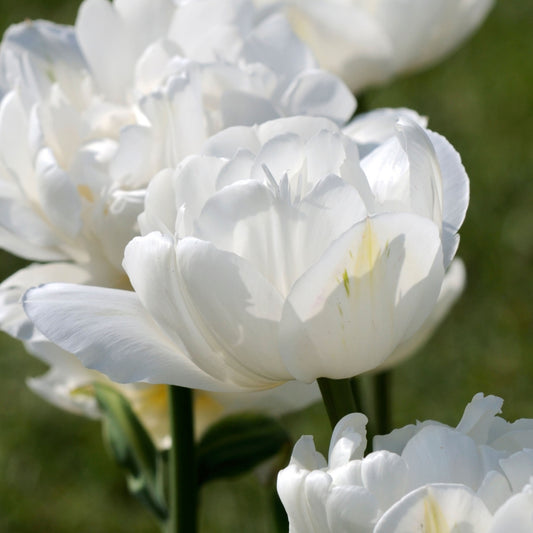
Tulips were once more valuable than houses, and they’re still one of the most popular flowers worldwide. These colourful blooms are a welcome sight in spring, brightening up your home and garden. Find out about different types of tulip and discover whether you prefer a classic style or cultivars with a modern, dramatic flair.
The choice of tulips available can be overwhelming, particularly if you have a small garden or just want to fill a couple of pots. Knowing a bit about how tulips are classified can help you narrow down the choice and choose the right cultivars for your garden. In this guide, I’ll give a brief description of different tulip types, with examples of each, to help you decide which tulip bulbs to buy.
Before we get started, I recommend asking yourself the following three questions:
-
When do you want your flowers to bloom? Tulips bloom from late March to May, depending on the variety.
-
What style of flower do you want? Some tulip divisions have the classic bowl-shaped flower, whereas others produce more unusual flowers.
-
Do you want your tulips to naturalise? Many people treat tulips as annuals and plant new bulbs each year. If you want your tulips to reliably flower for a second or third year, select varieties from divisions 4, 12, 13, 14 or 15.
Find out more about growing and caring for tulips, as well as steps you can take to encourage your tulip bulbs to reflower year after year in our complete guide to growing tulips.
How are tulips classified?
Tulips are grouped into 15 divisions based on the size and appearance of the flowers and foliage and when they bloom. Understanding the key features and flowering times of each division helps when planning your garden. For example, choosing varieties that flower at the same time will create an intense burst of colour, whereas combining cultivars from different divisions will give you a more varied, longer-lasting display.
Division 1: Single early
 |
As the name suggests, these are some of the first tulips to flower. They have single, cup-shaped flowers that open up in full sun. Single early tulips are relatively short, growing to between 25 cm and 45 cm in height. Grow them in pots or combine with other early spring bulbs in borders. Flowering period: Late March to early April Examples of single early tulips: Tulip ‘Apricot Beauty’, Tulip ‘Purple Prince’, Tulip ‘Christmas Dream’ |
Division 2: Double early
 |
This group includes early-flowering cultivars of double tulips. The bowl-shaped flowers have layers of petals, giving them a peony-like appearance, and last longer than other varieties. Double early tulips grow to around 30–40 cm and make excellent cut flowers. Flowering period: Late March to April Examples of double early tulips: Tulip ‘Foxtrot’, Tulip 'Peach Blossom' |
Division 3: Triumph

|
Also known as mid-season tulips, Triumph tulips produce single flowers on top of sturdy, mid-height stems. The flowers have a traditional tulip shape and come in a wide variety of colours. Many tulips in the Rembrandt group are technically bicoloured Triumph cultivars. This group of tulips are a great garden tulip and will happily grow in beds, borders and pots. Flowering period: April Examples of triumph tulips: Tulip 'Synaeda Blue', Tulip 'Synaeda Amor', Tulip 'Sanne' |
Division 4: Darwin hybrid

|
These long-stemmed tulips have large, robust flowers, up to 15 cm in diameter. The showy blooms make them popular cut flowers, but they also look beautiful planted en masse in beds. Darwin hybrids are one of the few tulip divisions that reliably flower in successive years – read our tulip care guide to find out what to do to encourage repeat flowering. Flowering period: April to May Examples of Darwin tulips: Tulip ‘Daydream’, Tulip 'Red Impression', Tulip 'Golden Parade' |
Division 5: Single late

|
Single late tulips have longer stems than early single varieties, growing up to 60 cm or more. These elegant flowers bloom in late spring, helping extend the flowering season and bridge the gap between spring bulbs and summer-flowering perennials. The petals are typically slightly pointed and may be oval, verging on rectangular, in shape. Flowering period: Late April to May Examples of single late tulips: Tulip 'Queen of Night', Tulip 'Angels Wish' |
Division 6: Lily-flowered

|
Tulips belong to the same family as lilies, and the relationship is particularly evident in this division of flowers. Lily-flowered tulips have slim flowers that flare at the top due to the pointed, recurved petals. They have tall, narrow stems, meaning they can suffer in strong winds, and are best planted in a sheltered spot. Flowering period: Late April to May Examples of lily-flowered tulips: Tulip 'Pretty Woman', Tulip ‘Ballerina’ |
Division 7: Fringed

|
This group of cultivars has distinctive fringed petals. The serrated edges are a result of a mutation, meaning that tulips in this category originate from a wide range of divisions and vary in size, appearance and flowering time. The fringe on the petals adds texture – in some cultivars, the fringe contrasts in colour to the rest of the petal. Flowering period: April to May Examples of fringed tulips: Tulip 'Queensland', Tulip 'Noordeinde' |
Division 8: Viridiflora

|
This small group of tulips are sometimes referred to as “green tulips” due to the green streak on the back of the petals. These attractive flowers emerge late and make a lovely addition to a border or cut flower garden, especially if you’re looking for something a bit different. Flowering period: May Examples of Viridiflora tulips: Tulip 'Spring Green', Tulip 'Purple Doll', Tulip 'Doll's Minuet' |
Division 9: Rembrandt

|
At the height of Tulip mania in 17th century Holland, “broken” tulips were a prized possession. The unique variegated patterns that appeared, seemingly randomly, on certain tulips was later discovered to be due to a virus. While true “broken tulips” aren’t commercially available anymore, many virus-free cultivars have been bred that mimic the patterned petals. These are known as Rembrandt tulips, named after the artist Rembrandt van Rijn. A Rembrandt tulip’s petals have a base colour with “brushstrokes” in a secondary shade. Flowering period: April and early May Examples of Rembrandt tulips: Tulip 'Zurel', Tulip ‘Helmar’, Tulip ‘Pretty Princess’ |
Division 10: Parrot

|
Parrot tulips include some of the most striking tulip varieties. These late-flowering tulips have ruffled, often multi-coloured, petals that twist and curl before opening out as the flower matures. As with fringed tulips, the unique serrations and colours of the petals are the result of mutations. Most varieties flower late, and they may need some protection from the weather. A showy bloom that’s perfect for flamboyant gardens. Flowering period: May Examples of parrot tulips: Tulip 'Rasta Parrot', Tulip 'Parrot Prince', Tulip 'Estella Rijnveld' |
Division 11: Double late

|
These peony tulips are taller than double early varieties and produce larger, rounder blooms. The layered petals and fragrance make them a popular type of tulip for bouquets. You may need to give the flowers some support as they can get damaged by wind or heavy rain. Flowering period: Late April to May Examples of double late tulips: Tulip 'Mount Tacoma', Tulip 'Blue Diamond', Tulip 'Mariage' |
Division 12: Kaufmanniana

|
Kaufmanniana tulips have pointed petals that open out to give a star-shaped flower that resembles a water lily. These petite tulips flower early and are suitable for pots, rockeries and the front of beds and borders. They’re long-lived, flowering for multiple years, and well suited for naturalising. Flowering period: March to early April Examples of Kaufmanniana tulips: Tulip 'The First', Tulip 'Water Lily' |
Division 13: Fosteriana

|
Sometimes called "Emperor tulips”, Fosteriana tulips have medium-length stems and large flowers that open up in the sun. They’re an excellent choice for naturalising, and will reliably flower year after year. They flower early, adding bright colour to beds and borders. Flowering period: March to April Examples of Fosteriana tulips: Tulip 'Purissima', Tulip 'White Emperor', Tulip 'Orange Brilliant' |
Division 14: Greigii

|
Greigii tulips are similar to Kaufmannianas in size and appearance, though they flower later. Some varieties produce multiple blooms per stem. In addition to large flowers, Greigii tulips have striking striped or mottled foliage that adds interest before the flowers bloom. Flowering period: April Examples of Greigii tulips: Tulip 'Red Riding Hood', Tulip 'Cape Cod' |
Division 15: Species and miscellaneous

|
Species tulips, also known as botanical tulips, are smaller than modern hybrid varieties, but they tend to be more resilient and long lived. They’re the best division for naturalising, as they grow more vigorously year after year. Plant them in rock gardens, at the front of borders or in containers where you can best admire their delicate flowers. Flowering period: Varies, but many flower early Examples of species tulips: Tulip clusiana, Tulip sylvestris, Tulip saxatilis 'Lilac Wonder' |