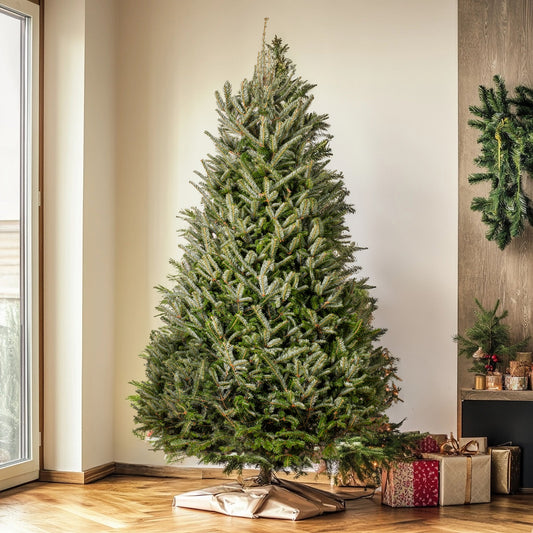
A real tree brings a festive scent, look and feel to your home. In this no-hassle Christmas tree guide, we’ll help you keep your tree looking magical up to and beyond Christmas Day and give you some options for how to recycle it once Christmas is over.
Buying a real tree for Christmas is a beloved festive tradition. Taking care of a Christmas tree is easy, even if you’re going away for a few days. In this guide, I’ll run through how long you can expect a Christmas tree to last and how to care for a live Christmas tree to ensure it looks beautiful through to Twelfth Night. If you have a potted Christmas tree, read our guide to looking after a pot grown Christmas tree instead!
Our cut Christmas trees are sustainably grown in the UK and monitored for shape and quality. Take the hassle out of Christmas and get a freshly cut Christmas tree delivered to your door, with free delivery on orders over £50.
How long does a real Christmas tree last?

This depends on the variety you choose and how you care for it. Nordmann firs and Fraser firs have the best needle retention and will last the longest – around five weeks. Spruce trees like the traditional Norway spruce are more prone to needle drop, so it’s better to put them up closer to Christmas to make sure your tree looks its best on the big day! Read our expert’s guide to Christmas tree varieties to help you choose the best Christmas tree for your home.
Following our guidelines below will keep your tree looking good for as long as possible. Buying a Christmas tree from the supermarket may be convenient, but you don’t know how long ago it was cut. We deliver our fresh cut Christmas trees to your door, so they last longer in your home.
Pot grown Christmas trees will live for years, but to keep the tree healthy, you should only bring your tree inside for a maximum of two weeks over Christmas. A cut Christmas tree is a better option if you want a Christmas tree in your home for as long as possible.
What to do when your Christmas tree arrives

Your tree will be thirsty from its journey, so the first thing to do is trim the trunk and give it a good drink. After a tree is cut, the sap leaking from the cut naturally begins to dry to protect the tree. Making a fresh cut on a Christmas tree helps it take up water more effectively and helps prevent needle drop.
Use a sharp saw to cut about an inch off the base – cut straight across, not at an angle. Stand your tree upright in a bucket of water for at least a couple of hours. You can leave it in the bucket of water in a cool place for a couple of days if you don't want to bring it inside immediately.
When you’re ready to bring your tree indoors, cut the netting and give your tree a shake to rid it of any bugs (better outside than inside!).
How to care for a real Christmas tree
The two things a Christmas tree needs to stay happy are water and cool temperatures. Providing your tree with both of these will minimise needle drop and keep your tree looking healthy for longer.
Choose the right spot for your tree
Christmas trees are used to cold weather. Hot or fluctuating temperatures will stress your tree, causing it to dry out and drop its needles. Position your tree as far from a radiator, fire or other heat source as possible and if near a window, let it have some fresh air. A cool conservatory, an unheated hall or in front of patio doors or a bay window are all good places to set up your tree.
Most Christmas tree lights sold these days are LEDs, which don’t emit much heat. If you’re still using an ancient incandescent set, this may be the year to replace it with new lights – the old lights will warm up your tree, and they could be an electrical hazard.
Buy the right Christmas tree stand
Your tree needs a constant supply of water, so use a Christmas tree stand with an easy-to-fill well. The stand needs to be large enough for the tree – avoid cutting the trunk into a V shape or stripping off bark to squeeze your tree into a small stand, as this makes it harder for the tree to take up water.
Keep your Christmas tree watered
Large Christmas trees can take up several pints of water a day, so it’s important to keep on top of watering. Check the water level in the tree stand every day and top it up as necessary. The cut edge of the tree needs to be completely submerged – if this dries out, the cut will seal itself, preventing the tree from taking up water.
If you’re going away over the festive period, you can set up a basic siphoning system to prevent your tree from drying out.
You don’t need to spray your tree with water or add anything to the water in the stand. Trees take up water most effectively from the trunk, and excess water on the needles can damage decorations and cause mould to form.
What to do with your tree after Christmas

A cut Christmas tree won’t grow roots, so it won’t survive if you plant it outside. Unlike most artificial trees, real trees are completely recyclable and there are many ways you can reuse parts of the tree in your garden. Here are eight ways you can repurpose your Christmas tree this year:
-
Shred your tree and use the chippings as mulch on your garden or to top up woodchip paths.
-
You can compost Christmas trees, but the needles can take a while to break down. Break up the tree into small pieces to aid decomposition.
-
Cut your tree up and stack the pieces in a shady corner of the garden. This provides a home and resources for insects and other wildlife, and the tree will eventually rot away.
-
Spread the needles and small branches on muddy paths.
-
Cut off the branches and spread them on your flower or vegetable beds to deter cats and other animals from digging (spiky needles work best!).
-
Prop your tree upright in the garden and add bird feeders or homemade edible decorations such as cranberries, nuts and popcorn. Once all the needles have turned brown, you can add the needles and branches to your compost and use the trunk as a post for a bird feeder or plant support.
-
Build a dead hedge. This is a great way of repurposing garden waste into a wildlife-friendly barrier. You’ll need more than one tree, but you can ask your neighbours to donate their trees to add to the other branches you have lying around.
-
Cut slices of the trunk and dry them out to use as coasters or next year’s Christmas tree decorations.
If you can’t find a way to use your Christmas tree at home, here are four ways you can recycle your Christmas tree:
-
Donated Christmas trees have been used to help protect sand dunes at various locations around the UK, including the Fylde coastline and Lossiemouth.
-
JustHelping is a charity that collects Christmas trees to raise money for local charities. You can register your tree for collection here.
-
Some farms and zoos collect Christmas trees to feed to their animals. Goats, alpacas and donkeys are particularly fond of them, so if you have an animal sanctuary nearby, contact them to see if they’d like your tree.
-
Check if your local authority has a collection service or special drop-off point for Christmas trees. You may also be able to drop your tree off at your local household waste site or put it in your garden waste bin.
Fresh Christmas trees don’t make good firewood. The wood hasn’t been properly seasoned, and the sap and needles can cause an intense, unpredictable blaze.
FAQ
How long do real Christmas trees last?
Cut Christmas trees typically last three to five weeks before they start looking shabby. You can maximise this time by keeping your tree well watered and positioning it in a cool part of the house with consistent temperatures. Fir trees tend to hold their needles longer than spruces. If you want to put your tree up early and take it down late, go for a Nordmann fir or Fraser fir tree.
How much is a real Christmas tree?
Christmas trees vary in price depending on the variety and whether you’re buying a pot grown or cut tree. Pot grown trees are more expensive per metre, but you can reuse them for several years, so they work out cheaper overall. Nordmann firs are the most popular cut Christmas trees – they cost more than spruces, but have better needle retention, so they last longer.
To get the best value for money, buy from a reputable supplier that offers fresh cut Christmas trees.
How do you care for a real Christmas tree?
Check your Christmas tree daily and top up the water in the stand if necessary so the cut end of the tree is always submerged. Keep your tree out of direct sunlight, in a cool part of the house away from fireplaces, radiators and other direct heat sources. Caring for a cut Christmas tree this way will help it retain its needles for longer. If you have a pot grown Christmas tree, stick your finger in the soil to check the moisture level and water it when it gets dry.
Can you replant a cut Christmas tree?
You can’t plant a cut Christmas tree as it’s unable to grow new roots from the trunk. Instead, recycle it locally or reuse it in your garden. Check out our ideas for repurposing and recycling Christmas trees above.
Can you take cuttings from a Christmas tree?
Technically, you can grow a new tree by taking semi-ripe or hardwood cuttings from a fir or spruce tree, however, this would need to be a rooted specimen, not a tree you’ve cut down and brought into your home. Cuttings from coniferous trees don’t always take, and you’re likely to be more successful growing Christmas trees from seed.