Product description
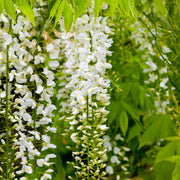
This is the classic, quintessential Japanese species vine, universally loved for its long, elegant violet racemes that open sequentially from the base to the tip. It creates a breathtaking, highly fragrant curtain of colour in mid-to-late spring. It is a towering, aggressive climber perfectly evolved to scramble up to the tops of tall trees in the wild.
To care for this iconic vine, you must act as the disciplinarian. It requires uncompromising support—flimsy wooden trellises will be crushed within a few years. Plant it in a hot, sunny spot with excellent drainage. You must physically guide its clockwise-twining shoots along your horizontal wires, and religiously execute the two-step pruning method (summer and winter) to convert its endless leafy vines into blooming spurs.
Please Note: When purchasing plants, please consider that each live item is unique and may therefore differ from the images shown, which are for illustration purposes only. The plant will be supplied in a growers pot. Depending on season, some plants may be pruned back to encourage growth and deciduous plants may arrive without leaves.
Japanese Wisteria
Wisteria floribunda
Wisteria floribunda
Product description
This is the classic, quintessential Japanese species vine, universally loved for its long, elegant violet racemes that open sequentially from the base to the tip. It creates a breathtaking, highly fragrant curtain of colour in mid-to-late spring. It is a towering, aggressive climber perfectly evolved to scramble up to the tops of tall trees in the wild.
To care for this iconic vine, you must act as the disciplinarian. It requires uncompromising support—flimsy wooden trellises will be crushed within a few years. Plant it in a hot, sunny spot with excellent drainage. You must physically guide its clockwise-twining shoots along your horizontal wires, and religiously execute the two-step pruning method (summer and winter) to convert its endless leafy vines into blooming spurs.
Please Note: When purchasing plants, please consider that each live item is unique and may therefore differ from the images shown, which are for illustration purposes only. The plant will be supplied in a growers pot. Depending on season, some plants may be pruned back to encourage growth and deciduous plants may arrive without leaves.
Give your plants the best start

Plant Feed
Rootgrow Mycorrhizal Fungi
60g
£5.99
Add to basket


Gardening Supplies
RocketGro Multi Purpose Compost
50L
£13.99
Add to basket

Garden Plant Size Guide

Plants in larger pots can be multiple years older than their smaller counterparts with more mature root systems and foliage. This makes them able to thrive as a full size plant in your garden quicker than smaller alternatives.
The most common size of pot that garden plants come in are 9cm/1L/3L/5L this is in reference to the diameter at the top of the pot.
9cm potted plants still remain the most popular cost effective option though, they just may take a little patience to allow them to grow into full maturity once planted in your garden.


Plant specs, care guide & tips
Key features


When to plant
| Jan | Feb | Mar | Apr | May | Jun | Jul | Aug | Sep | Oct | Nov | Dec |
|---|---|---|---|---|---|---|---|---|---|---|---|
Planting and period of interest times are general guidelines and may vary based on your location and conditions. For best results, consult local gardening resources.
Instructions
Top Tip
The Wisteria floribunda variety naturally twines clockwise. When training young shoots, always wrap them clockwise, or the plant will constantly fight you and eventually snap.
How to Water
To water Wisteria floribunda, soak deeply once a week in year one to build strong roots. Once mature, let the topsoil dry out, but keep it moist while its classic violet buds develop. Always water the base.
How to Plant
To plant Wisteria floribunda, dig a hole twice as wide as the rootball but exactly the same depth. Enrich the excavated soil with a generous scoop of compost to ensure a nutrient-rich loam. Place the vine in the hole, making absolutely sure the knobbly graft union sits safely above the soil line. Backfill firmly, tie the main stem clockwise to your heavy-duty wire, and water deeply to settle the roots.