Brighten up your home and garden this winter with house plants, outdoor plants and bulbs that flower at Christmas. From vibrant amaryllis and poinsettias to stunning clematis and winter jasmine, discover the best Christmas plants and flowers for your home and garden.
Christmas is a time of celebration, and what says celebration more than flowers? Even during the darkest days of the year, some outdoor plants continue to flower. You can also create your own indoor flower displays with beautiful amaryllis, hyacinth and Paperwhite narcissi. With a bit of advance planning, you can enjoy Christmas flowers throughout the festive season.
Bulbs that flower at Christmas

Bulbs that flower in January and February can often be ‘forced’ to flower early, in December. Timing is key, so check the exact timing for your cultivar to make sure you start at the right time. If you want to play it safe, plant sets of bulbs every couple of weeks to spread out the flowering period.
Amaryllis
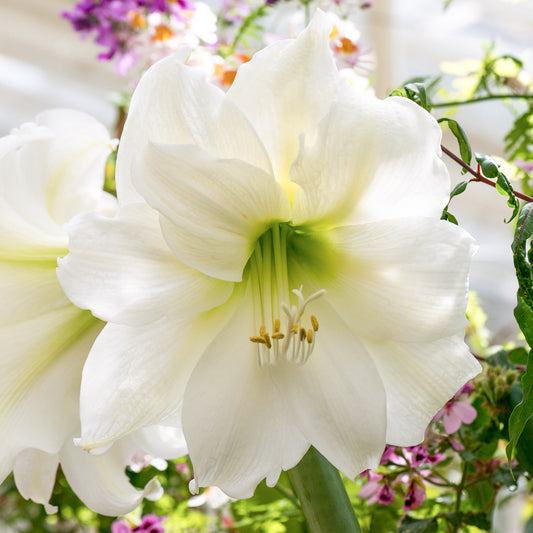
Amaryllis (Hippeastrum) are traditional Christmas flowers that will bloom year after year. Each bulb produces 1–3 tall stems, each topped with 3–5 large flowers. Choose 'Mont Blanc' for white flowers at Christmas, 'Rilona' for soft apricot hues, 'Temptation' for dramatic red and white petals, and 'Gervase' or 'Apple Blossom' for classic pink and white tones.
Amaryllis bulbs typically flower six to eight weeks after planting (larger bulbs may take longer), so plant bulbs in October to get flowers for Christmas. Each bulb’s display should last two to three weeks, with flowers blooming in succession. Remove individual flowers as they fade, and once all the flowers on a stem have finished, cut it at the base to encourage more stalks.
Once your amaryllis has finished flowering, leave it in a sunny place until the leaves are yellow and withered. Move the plant somewhere cool for ten to twelve weeks to let it become dormant. Once the dormant period is over, you can repot it and start the cycle again. With proper care, each year, your amaryllis bulb will grow bigger and produce more stems and flowers.
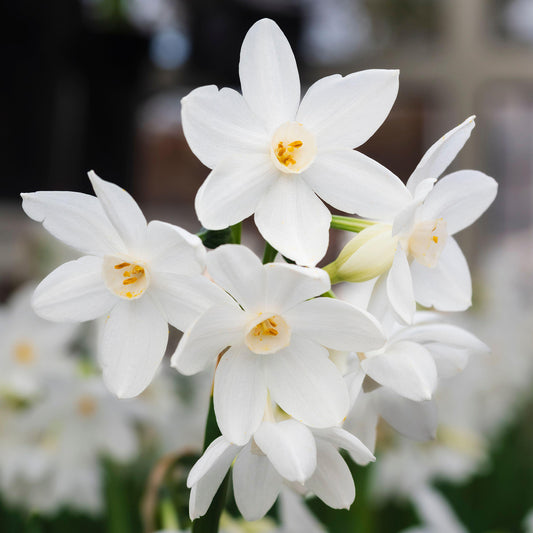
Narcissus tazetta ‘Paperwhite’
This fragrant narcissus produces tall stems topped with clusters of delicate, pure-white flowers. It’s one of the fastest-growing narcissi, taking between four and eight weeks to flower – they’ll grow faster in a warm, indoor location. Plant Narcissus tazetta 'Paperwhite' bulbs in the first half of November to get Christmas flowers. Ideally, plant bulbs in succession, a week or two apart, to get a longer-lasting display.
You can plant the bulbs in compost or bulb fibre (only bury the bottom half of the bulb) or in water. The latter can look quite striking in a glass vase. Fill the bottom of the vase with small stones or gravel, then position the bulbs on top and add water to a level just below the bulbs. A tall vase helps support the stems of the narcissus. If you’re growing them in a shallower container, like a bulb bowl, you may need to add a support structure, such as woven twigs.
A study by Cornell University found that you can reduce the height of the stems and leaf growth, without affecting the flowers, by using a solution of 4 to 6% alcohol. Grow the narcissus in a glass vase with pebbles and water as usual until the shoots are a couple of inches tall, then drain the water and replace it with the alcohol solution. You can use any “hard” liquor, such as gin, vodka or rum.
Narcissus tazetta ‘Paperwhite’ is tender, but you can grow it outdoors in spring in mild, sheltered spots. Many people throw forced Narcissus tazetta ‘Paperwhite’ bulbs away after flowering, but you can store the bulbs and pot them up again next year for another display.
Hyacinth
Hyacinths traditionally flower in the spring, but you can force them to get Christmas flowers. You’ll need specific bulbs to get flowers for Christmas and start them early – around the end of September or the beginning of October. For best results, choose a variety that’s been prepared with colder temperatures, such as Hyacinthus orientalis 'White Pearl', which will give you white flowers for Christmas, or Hyacinthus orientalis 'Jan Bos', which has vibrant reddish-pink blooms.
Plant bulbs in bulb fibre or compost, leaving the tops poking out. The bulbs can be close together, but shouldn’t touch each other or the side of the container. You then need to store them in a dark, cool place, such as a cellar, garage or shed. When the shoots are 4-5 cm long, bring the plants indoors. Let them become accustomed to the new conditions by placing them in a cool room away from windows, before moving to a warmer, sunnier position.
You can also grow hyacinths in glass vases or jars without compost. Make sure the bulb sits just above the water level and place it in a dark place for around six weeks until the roots have formed and there’s a green shoot. You can then bring it into the light to finish growing.
House plants for Christmas

Indoor plants come into their own in winter when many of us are desperate to surround ourselves with greenery. If you’re struggling to come up with present ideas for loved ones, they also make a long-lasting Christmas gift!
Poinsettia
Nothing says Christmas like a poinsettia. This quintessential Christmas plant produces large colourful bracts (modified leaves) that resemble flowers. Unlike bulbs, you don’t have to worry about a short flowering period, as a poinsettia will keep its colour for several months.
A red poinsettia is most traditional, with Alaska White another popular choice, but other colours are available. Christmas Surprise Orange has stunning, bright orange bracts that give a wonderful autumnal feel to any room. Christmas Beauty Pink has soft pink bracts, or opt for a more dramatic look with the white-splattered red leaves of Superba Glitter.
Christmas cactus
These delightful succulents are one of the best house plants for Christmas, especially if you’re not particularly green-fingered. They flower year after year with minimal care needs and are very tolerant of neglect! Christmas cacti (Schlumbergera) come in a wide variety of colours, including pink, white and red, and flower throughout the winter.
Christmas cacti prefer indirect light – an east-facing windowsill is ideal. Move them to a cooler location after flowering and again in mid-September to encourage flowering in subsequent years.
Outdoor plants that flower at Christmas

There’s a tendency for gardens to look a little drab at this time of year, but that doesn’t have to be the case. Many evergreen shrubs produce berries, which add jewels of colour, as well as providing an important food source for birds. Admittedly, the choice of flowering plants is smaller, but there are some stalwarts that don’t mind the dark days and winter frosts. The good news is that October is the perfect time to plant these perennials and shrubs, so they can establish roots before the cold temperatures hit.
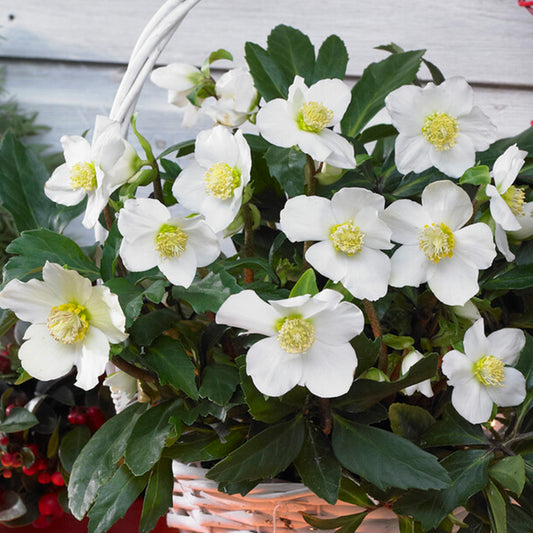
Helleborus niger (Christmas rose)
Although it’s known as the “Christmas rose”, this hellebore is actually a close relative of the humble buttercup. Helleborus niger is a hardy, evergreen perennial that flowers from mid-winter through to spring. Its evergreen, leathery leaves add texture to your border throughout spring, summer and autumn, and then, in the depths of winter, when other plants are sleeping, large, white, buttercup-like flowers finally bloom.
Helleborus niger thrives in sheltered, partially shaded areas and is best planted between October and March.
Mahonia (Oregon Grape)
Mahonias are evergreen shrubs that produce spikes of bright yellow or orange flowers. Some varieties flower in late summer and autumn, but others, such as 'Winter Sun' and 'Charity', flower from November to January.
Mahonias are upright plants, but different varieties grow to different heights and spreads, so check before planting to make sure you have room in your garden. They prefer a shaded spot and moist, well-drained soil.
Clematis ‘Freckles’
While most clematis flower in spring and summer, Clematis 'Freckles' bucks the trend by flowering in the darkest months, from November or December through to February. It’s a stunning climber, with unique cream petals speckled with burgundy “freckles”. The flowers are followed by fluffy seedheads that fade just as the rest of your garden wakes up for spring.
Clematis ‘Freckles’ likes full sun, though with some shade around the base of the plant, and moist soil. Make the most of the winter colour by training it over a pergola or up a south-facing wall. Find out more about how to grow clematis.
Jasminum nudiflorum (winter jasmine)
This deciduous climber is easy to grow and produces delightful yellow star-shaped flowers from December through to March. Plant Jasminum nudiflorum in a sheltered spot in full or partial sun and train it up a support (it will need tying in) or let it ramble over low walls or banks.
Cyclamen (sowbread)
Cyclamen provide reliable colour throughout the winter months. Their bright pink, red and white flowers will make you smile on those grey, drizzly days when winter has sucked the colour from your garden. These compact plants are perfect for patio containers or garden beds.
You can grow cyclamen from tubers, but if you want flowers this year, you’ll need to buy bedding plants. As they’re petite plants, you’ll want to plant a group of them for effect. Our Cyclamen Carry Pack Mix is excellent value, or you can buy potted mixed varieties if you prefer more established plants.
FAQ
What flowers bloom at Christmas?
Helleborus niger (the “Christmas rose”), cyclamen, mahonias, winter jasmine and some clematis varieties are all garden plants that flower at Christmas and through the winter months. You can also force amaryllis, hyacinth and certain narcissus bulbs to flower at Christmas. If you’re looking at house plants for Christmas, choose a poinsettia or Christmas cactus for reliable colour through the festive season.
What is the red Christmas flower?
A red poinsettia is what most people think of when they talk about red Christmas flowers, though the “flowers” are actually bracts or modified leaves. A poinsettia adds vibrant, festive colour to your home throughout December, making it a perfect Christmas centerpiece or gift.
What are the best Christmas plants and flowers?
Brighten up your home this Christmas with gorgeous amaryllis flowers in shades of red, white and pink, along with fragrant Narcissus tazetta 'Paperwhite' blooms. Poinsettias are traditional Christmas plants that come in various shades, and Christmas cacti also offer pretty flowers at this time of year. Helleborus niger (Christmas rose) and mahonia can brighten up shady parts of your garden, while Clematis ‘Freckles’ and Jasminum nudiflorum (winter jasmine) are colourful climbers, perfect for a sunny patio or courtyard garden.