These spiky plants are colourful, low maintenance and loved by birds. Berberis make brilliant hedging plants (particularly if you want to deter intruders!) or garden shrubs. Just be sure to don your gauntlets before getting too close!
Barberry (Berberis) shrubs are hardy, thorny shrubs that produce bright flowers and colourful berries. Some deciduous varieties are grown specifically for their vibrant purple, red or yellow foliage. Berberis berries are a treat for birds like thrushes, blackbirds, fieldfares and redwings, and the rare Barberry Carpet Moth feeds solely on the shrub.
One feature of the plant that may be offputting or welcome, depending on your perspective, is the sharp thorns. These are vicious enough to deter even the most ambitious intruder. While the spines allow birds to perch in the bush, safe from prowling cats, they can make it painful to prune if you don’t take proper precautions.
Barberries range in size from tiny 30 cm varieties up to 5 m giants. There are many species, but most popular varieties are cultivars of Berberis thunbergii (Japanese barberry) or Berberis darwinii (Darwin’s barberry).
Where to plant berberis

Berberis grows best in full sun or partial shade. Some evergreen varieties, such as Berberis darwinii, are more shade tolerant. If you’re growing deciduous varieties, they’ll flower and fruit more profusely in full sun; however, very strong sun can scorch some of the golden-leaved cultivars.
Berberis can cope with a range of soil types, as long as the soil is moist and well-drained. It won’t do well in waterlogged or very dry conditions.
You can use these versatile shrubs in various settings. Compact cultivars, such as ‘Bagatelle’ and ‘Admiration’ look good in pots or in narrow beds or rockeries. Plant larger varieties at the back of a mixed border to add height and structure or use a single berberis as a specimen plant to create a focal point for your garden. A berberis hedge looks stunning and is wildlife friendly – Berberis thunbergii f. Atropurpurea is the most popular berberis cultivar for hedging.
When to plant berberis
You can plant berberis grown in containers at any time of year, as long as you avoid periods of heavy frost and water the plants well during the summer. Mid-autumn to mid-spring is the best time to plant deciduous berberis, while the plants are dormant. Evergreen berberis varieties will benefit from being planted in late autumn (October or November) or early spring (March or April) when the soil is slightly warmer.
The most cost-effective way to buy berberis hedge plants is as bare-root plants. Bare-root berberis should be planted during the plant’s dormant period between November and March.
How to plant berberis

If I haven’t made it clear enough by now, berberis are spiky! I’d definitely recommend wearing thick gardening gloves when planting a berberis bush and consider grabbing a pair of old sunglasses or other eye protection. If your soil is heavy or compact, it’s worth digging in some organic matter before planting to improve drainage.
To plant a container-grown berberis, dig a large hole to the same depth as the root ball. Ease your plant out of its container, place it in the hole and backfill the soil. Firm the soil around the berberis and give it a good drink.
When planting berberis in a pot, choose a container a few centimeters wider than the pot it came in and fill with John Innes No. 3 or a similar soil-based compost.
How to plant a berberis hedge
Prepare the ground before your hedging plants arrive, as bare-root plants are best planted immediately. Soak the plants’ roots for an hour before planting. Dig a trench to the same depth as the soil mark on the plant. Space the plants 30–60 cm apart, depending on the variety and how dense you want the hedge to be. Backfill the soil, firm in and water well.
How to care for berberis
Berberis shrubs planted in the ground are very low maintenance. Like most newly planted shrubs, they need watering deeply and frequently during the first summer to help them establish strong roots. Berberis don’t need regular feeding, but it helps to spread a layer of mulch around the plants in spring. Make sure the mulch doesn’t touch the stems, as this can lead to rotting.
Berberis grown in pots will need regular watering during dry periods and fortnightly feeding with a liquid fertilizer throughout spring and summer.
When to prune berberis

Most berberis don’t need significant pruning, but a light annual prune helps control the size and shape of a shrub or hedge. How and when you trim berberis depends on whether it’s a deciduous or evergreen variety. Make sure you wear a tough coat, safety glasses and thorn-proof gloves when pruning berberis!
Prune deciduous berberis in mid to late winter, when the plant is dormant. Pruning stimulates new growth and leads to more vibrant colours on cultivars with bright, variegated leaves like ‘Rose Glow’. On these varieties, you can prune hard, cutting back up to a third of the old stems. If you’re growing berberis for autumn colour, it’s better to take a lighter approach and just remove damaged or wayward stems to maintain the shape.
Prune evergreen or semi-evergreen berberis in early to mid-summer, after the plant has flowered. Unfortunately, this will mean no berries that year, so you can wait and prune in late autumn or winter. Your decision will likely depend on whether you value berries or a formal garden hedge or bush more! Evergreen berberis only need a light prune to keep their shape.
If you have a very overgrown plant, you can cut the whole plant back to 30 cm above ground level in late winter. Feed and mulch it to encourage growth, and it should bounce back, although you’re unlikely to get flowers or berries in the first season.
How to propagate berberis
Semi-ripe cuttings work best for most berberis, though the method used varies depending on the specific variety. Take cuttings in late summer or early autumn. Heel cuttings have the best chance of success for most species: gently pull a side shoot of new growth from the plant, so it comes away with a sliver of bark. Mallet cuttings, which include a section of older growth at the base of the cutting, are recommended for thin-stemmed Berberis thunbergii cultivars.
It’s also possible to collect berberis seed, though the plants you grow are likely to be a hybrid variety. Seeds need a cold period to germinate, so either sow them immediately outside in autumn or keep them somewhere cool over winter.
Whether you’re growing plants from cuttings or seeds, you need some patience, as plants usually take a couple of years to establish before flowering.
Common problems
Berberis sawfly larvae are the main pest to watch out for. These small caterpillars can decimate the leaves of an entire plant. Check plants regularly between May and October and either remove larvae by hand or use a spray. Natural enemies of sawfly include ground beetles, birds and wasps.
Honey fungus and phytophthora root rot can affect berberis bushes. In either case, the affected plant should be destroyed, and it’s best to avoid replanting berberis or other susceptible species in the same place.
Our favourite varieties of berberis
Berberis darwinii ‘Compacta’ is a small, evergreen berberis with dense, spiny leaves. It produces masses of golden flowers in spring, followed by blue-black berries in summer. This variety tolerates partial shade and can be planted in isolation or used to create a low hedge or topiary balls.
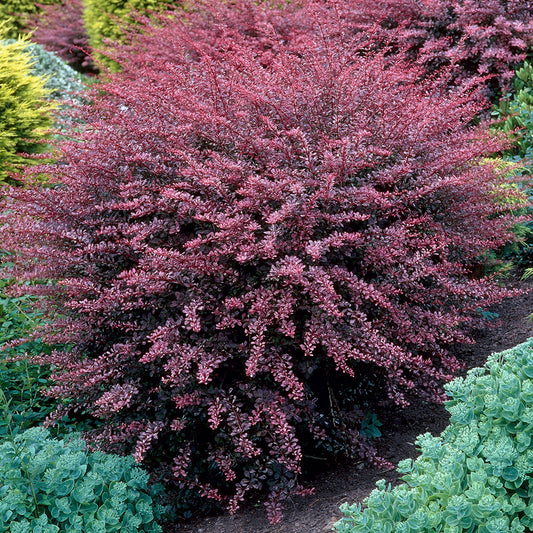
Berberis thunbergii f. atropurpurea (also known as “purple berberis” or “purple Japanese barberry”) is a striking alternative to traditional deciduous hedging plants, with deep purple leaves that mature to a fiery red in autumn. The bright red berries are popular with blackbirds, thrushes and redwings.
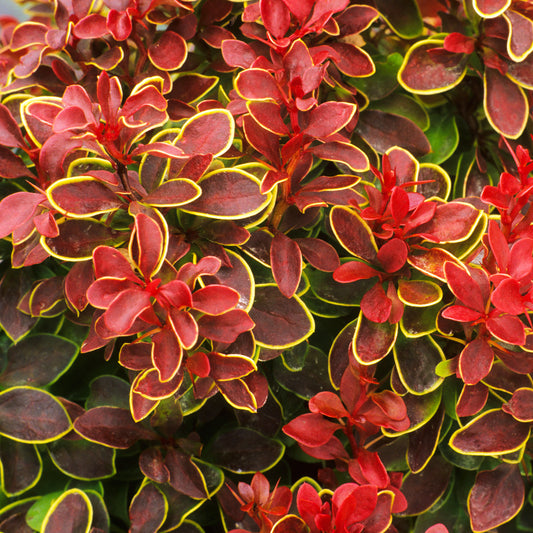
Berberis ‘Orange Sunrise’ is primarily grown for its stunning ornamental foliage. The small, rounded leaves start off pink in spring, before maturing to bright red, with yellow edging, in summer. It's an upright, columnar variety that you could use as a focal point in a small garden or in a colourful hedge.
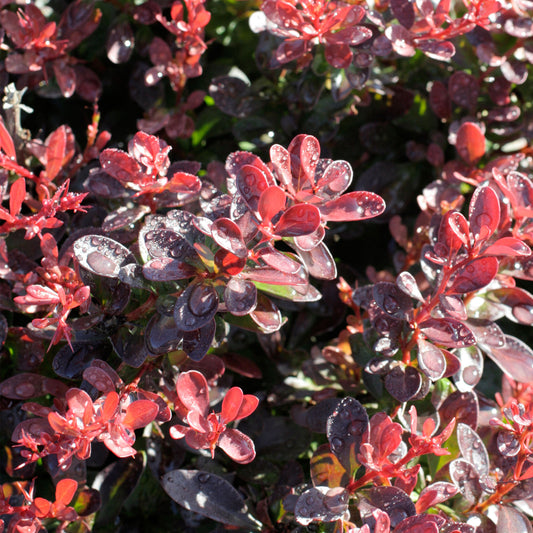
Berberis ‘Rose Glow’ has beautiful speckled pink and purple leaves. These contrast with the yellow flowers produced in spring. The vibrant red berries often stay on the plant after the leaves have fallen for winter interest.
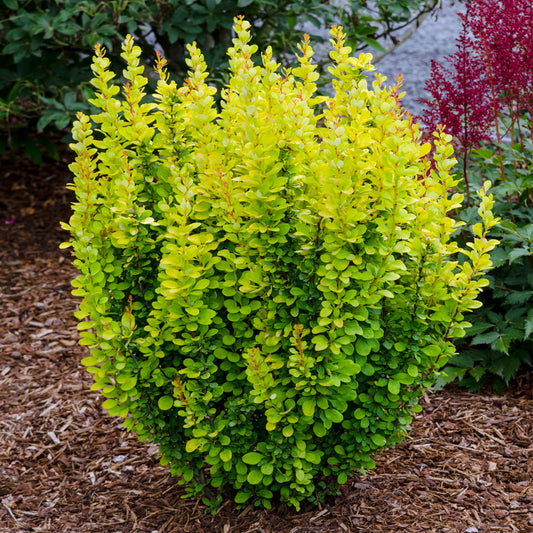
Berberis ‘Golden Rocket’ offers bright yellow-green foliage and yellow flowers, loved by pollinators, in spring. Come autumn, the leaves change colour to fiery orange and red, accompanied by small red berries.
FAQ
Is berberis evergreen?
There are deciduous and evergreen varieties of berberis. Popular evergreen cultivars include Berberis darwinii and Berberis julianae. There are also a few semi-evergreen varieties, such as Berberis × media 'Red Jewel'.
What are the benefits of berberis?
Eye-catching, versatile and wildlife friendly: berberis is an often-underrated shrub that can benefit many gardens. Evergreen varieties give year-round interest, but even deciduous cultivars have a lot to offer for all but a few months of the year, with colourful foliage, spring flowers and autumn berries. Berberis makes a great ornamental hedge, and it offers both shelter and food for birds and invertebrates.
When should you prune berberis?
Evergreen berberis shrubs and hedges can be trimmed in summer, after flowering. Alternatively, if you want the plant to grow berries, wait until after it has fruited in the autumn. Prune deciduous berberis in mid to late winter, during the dormant period.