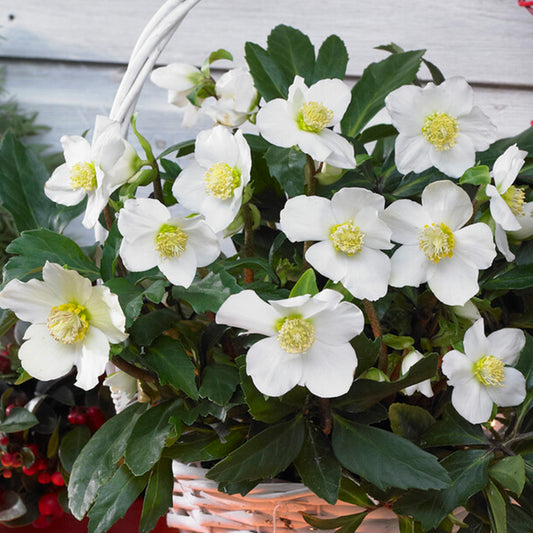
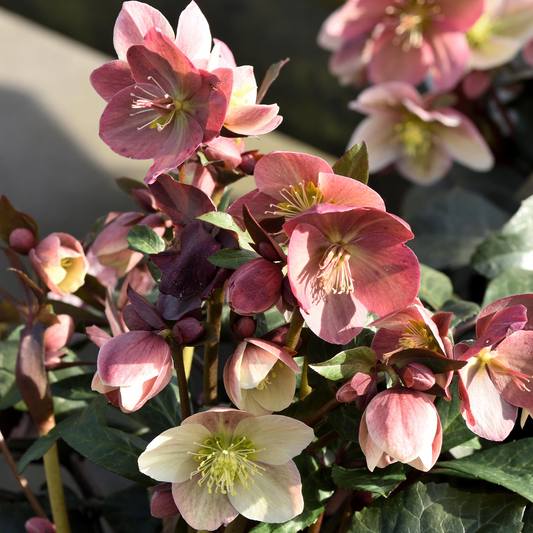
Hellebores are an essential part of any winter garden. When most other plants are sleeping, a hellebore's pretty white, pink or green flowers remind us that spring is just around the corner. Plant different cultivars together for an extended, varied display from early winter through to spring.
If you have a suitable spot in your garden, I implore you to plant some hellebores. Their nodding heads brighten up the dark days and general dullness of January and February, fading only in spring when bulbs flower and trees begin to blossom. If you don't have the rich soil and partial shade that hellebores prefer, you can grow smaller, less hardy varieties in pots.
There are around 20 species of hellebores, with various subspecies and many hybrids. The most common hellebores are cultivars of Helleborus niger (Christmas rose) or hybrid cultivars of Helleborus orientalis (Lenten rose). The native stinking hellebore (Helleborus foetidus) is a larger, green-flowered variety that grows up to 90 cm. Fortunately, its foliage is only pungent when crushed. Once established, most varieties are easy to look after.
Where to plant hellebores

Hellebores like fertile soil that's moist but well-drained. Most varieties prefer dappled or partial shade – hellebores grown in full shade may produce fewer flowers. Hellebores are particularly well suited to woodland gardens or borders, as deciduous trees and shrubs allow light through in winter but protect the hellebores from the strong summer sun.
Most hellebores have downturned flower heads, which are best admired from below. This makes them a great choice for hanging baskets or elevated beds, for example, at the top of a retaining wall.
You can grow Helleborus niger, Helleborus × ericsmithii cultivars and other delicate varieties in containers year-round. Other hellebores can be grown in pots temporarily and planted out in beds once they've finished flowering in spring.
When to plant hellebores
You can plant hellebores at any time of year, but most people buy hellebore plants when they're in bloom in winter. If you're planting hellebores in the summer, you'll need to water them regularly to help them settle in.
How to plant hellebores

Dig plenty of organic matter into the soil around the planting area to help keep the soil moist and well drained. Garden compost is ideal – use a bucketful per metre. Dig a hole a little deeper than the size of the pot and add a bit more organic matter to the bottom. Remove your hellebore plant and if it's looking a bit pot bound, gently tease the roots apart. Position your hellebore plant in the hole and backfill so the soil is at the same level it was in its pot. Gently firm the soil around the plant and give it plenty of water.
When growing hellebores in containers, choose a deep pot with a wide top. Fill it with John Innes No. 2 or No. 3 mixed with some grit to help with drainage. Make sure you raise the container using blocks or pot feet so water can drain out the bottom.
Caring for hellebores
Water hellebores regularly during their first spring and summer in the ground. You likely won't need to water it too much over the winter, as you don't want the soil to become waterlogged. After the first year or two, most hellebores are fairly drought tolerant.
Hellebores don't require regular feeding, but like most outdoor plants, they'll benefit from an annual mulch. Hellebores in pots will need additional nutrients. Use tomato feed or another potassium-rich liquid fertiliser throughout the flowering period.
Most hellebores are hardy and don't require winter protection; however, Helleborus niger requires a little more care and attention. It needs light, free-draining soil and is best planted in a sheltered area where it's fragile flowers are protected from winter storms. Alternatively, you can plant it in a container and overwinter it in a cool greenhouse or cold frame.
Cutting back hellebores

Cut back old hellebore leaves on Helleborus × hybridus and Helleborus orientalis in December or January, before fresh growth emerges. This helps prevent leaf spot from spreading to new foliage and allows the new flowers to shine. Prune old leaves and flower heads from Helleborus niger culitvars in late spring, once the plant has finished flowering.
How to propagate hellebores
You can propagate hellebores by dividing established plants or growing new plants from seed. Helleborus foetidus, Helleborus lividus and Helleborus argutifolius can only be propagated from seed. If you want an exact copy of a plant, you'll need to divide it, as plants grown from seed often differ from the parent plant.
Hellebores have deep roots and don't like to be disturbed, so divided plants may take several years to recover before flowering. To divide a hellebore, carefully dig up the whole plant in early autumn and shake loose soil off the roots. Washing the roots can help you see where to divide the crown, though this isn't always necessary. Use a sharp spade or knife to cut the crown into 3–5 pieces, making sure that each division contains buds and roots. Replant the divisions in prepared soil, so the top of the roots are an inch below the surface.
Hellebores will self seed and spread naturally, or you can collect seeds from ripe seed pods and sow them outdoors or in modules. Hellebore seeds can struggle to germinate if they're allowed to dry out (as you would store seeds from other plants), so you may have more success if you sow them straight after collection and keep them watered during the dry summer months. Seeds need a cold period to germinate, so don't be afraid to place them outside over the winter.
Common problems
Hellebore leaf spot is caused by a fungus and affects most hellebore varieties, though it can be particularly damaging to Hellebrous niger. The distinctive brown and black splotches on the leaves are easily spotted. Remove and burn any affected foliage to prevent the infection from spreading. Removing old leaves from Lenten roses and hybrids before flowering begins in winter helps prevent leaf spot affecting new growth.
Hellebore black death is a more serious issue, and any affected plants must be dug up and destroyed. The virus causes black streaks to develop on the leaves and stems of affected plants. These typically follow the veins of the leaves, so look quite different from the spots and blotches caused by leaf spot.
Hellebore aphids are only found on hellebore plants. These white or pale green bugs are most noticeable in spring, though they live on the plants year round. Encouraging a balanced ecosystem, including natural predators like ladybirds, parasitoid wasps and ground beetles, can help manage aphid populations, though it's also good practice to inspect hellebores in spring and remove aphids by hand if possible.
Helleborus foetidus may also be affected by leaf mining flies, though these only cause cosmetic damage to leaves.
Our favourite hellebore varieties
Helleborus niger (Christmas rose) is a popular species of hellebore that flowers around Christmas time. Despite its name (commonly translated to "black hellebore"), its outward-facing flowers are pure white, not black. Its small size makes it well suited to pots as well as beds.
Helleborus 'Pirouette' is part of the Helleborus × ericsmithii group of hellebore hybrids. Its pink-tinged white flowers bloom from January through to April and darken to a deeper pink with age.
Helleborus 'Christmas Carol' is a cultivar of Helleborus niger. Its bright white flowers tend to appear a little earlier than Helleborus niger, so it's a more reliable choice if you want flowers in time for Christmas.
Helleborus 'Star of Passion' is another Helleborus × ericsmithii hybrid. Like 'Pirouette', it flowers from mid-winter to mid-spring, but its blooms are a deeper burgundy shade of red, which beautifully complements the paler flowers of other varieties.
FAQ
When is the best time to plant hellebores?
Winter is the best time to plant hellebores, as long as the ground isn't frozen. Hellebores are usually available to buy in winter, and as they're in bloom, you can choose the colour of flower you want. You can plant hellebores at other times of the year, but it's best to avoid summer as hellebores struggle to establish in hot, dry conditions.
When do hellebores flower?
Most hellebores flower from mid or late winter through to spring. Helleborus niger cultivars such as Helleborus 'Christmas Carol' usually flower earlier, in December, whereas some hybrids, such as Helleborus × sahinii 'Winterbells' can flower into late spring and even early summer.
When should you cut back hellebores?
This depends on the type of hellebore. Removing old leaves from Helleborus orientalis and Helleborus × hybridus cultivars in early or mid-winter helps prevent hellebore leaf spot from developing and infecting new growth. However, Helleborus niger and its cultivars shouldn't be cut back in winter, as this will affect flowering. You should remove any diseased leaves as they appear, but save pruning until late spring, after the plant has finished flowering.
Can I prune hellebores in summer?
Most gardeners prune hellebores in winter or spring (depending on the variety) but you may wish to remove spent flower heads from late flowering varieties in summer to prevent self-seeding. Pruning hellebores is generally done to prevent the spread of leaf spot, so if you spot any diseased leaves in summer, it's best to remove these immediately. Otherwise, leave the leaves on the plant while it sleeps the summer months away.